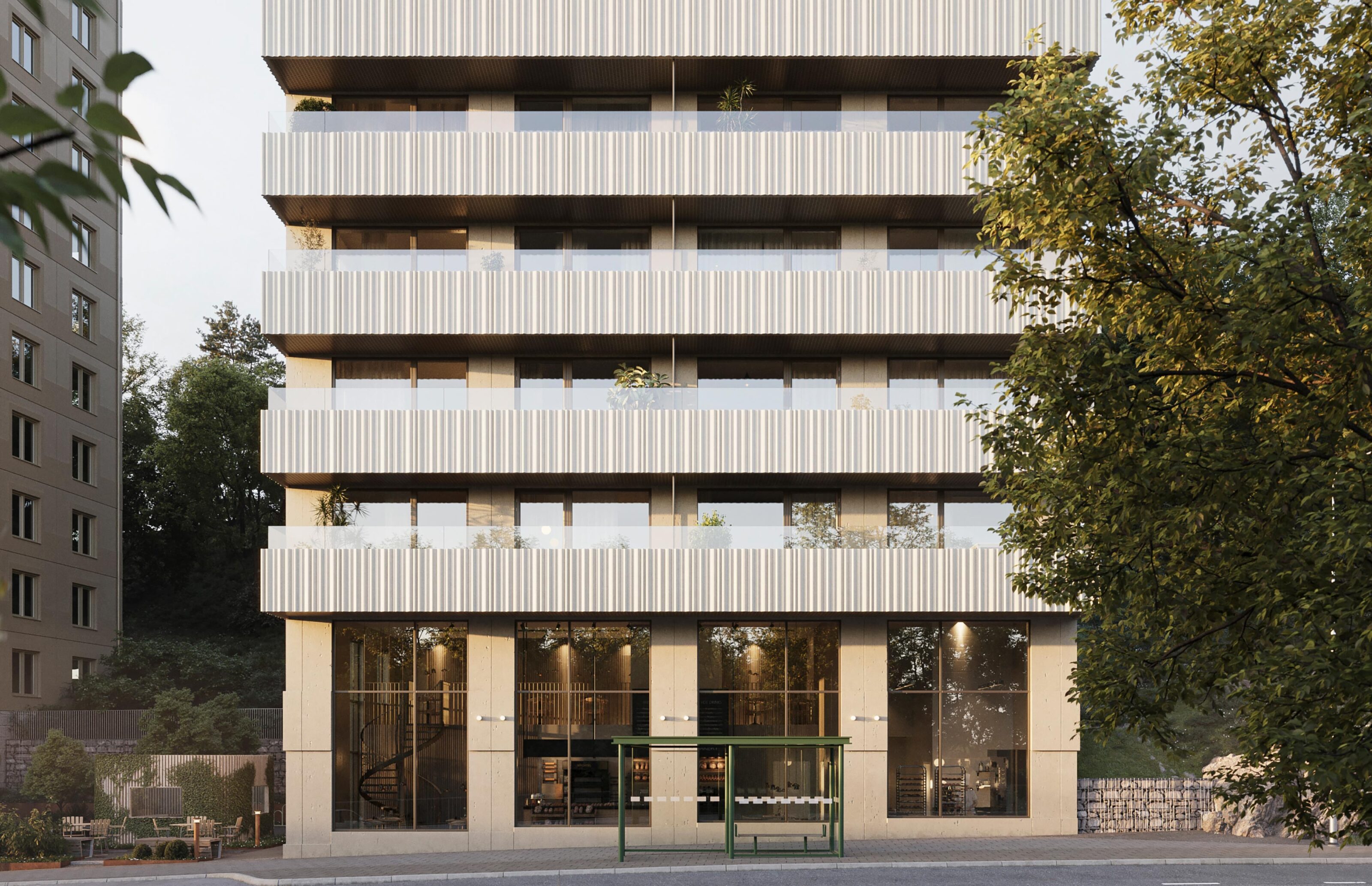
Branten, Kungsholmen
Branten is part of the transformation of Stadshagen in north-western Kungsholmen in Stockholm, a regeneration project led by the City of Stockholm. The aim is to create a dense, green and attractive neighbourhood for living, working, studying and spending time in. Kjellander Sjöberg, together with Wallin Bostad, is developing two residential buildings. The first phase, Branten, comprises 36 carefully designed homes.
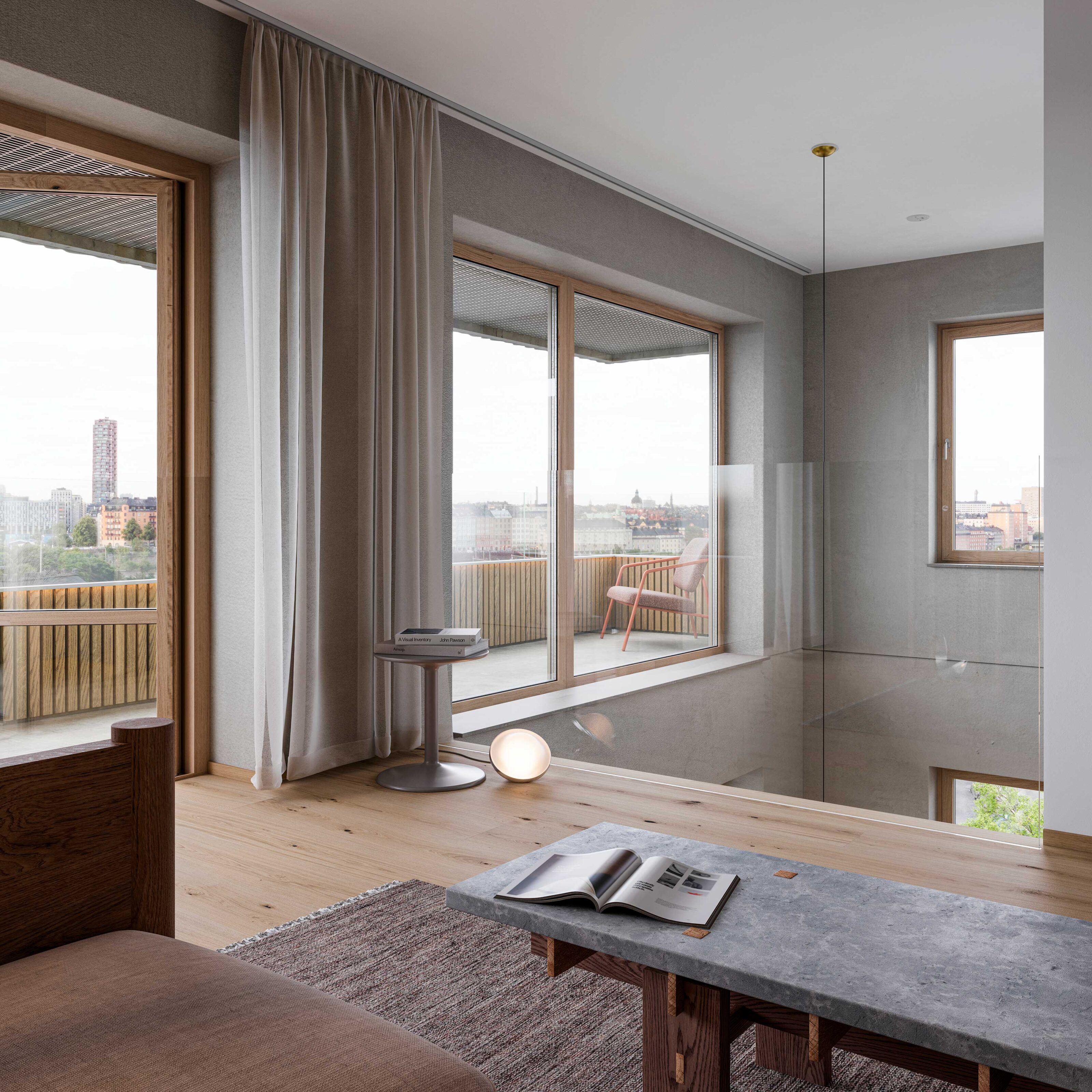
Quality homes with a view
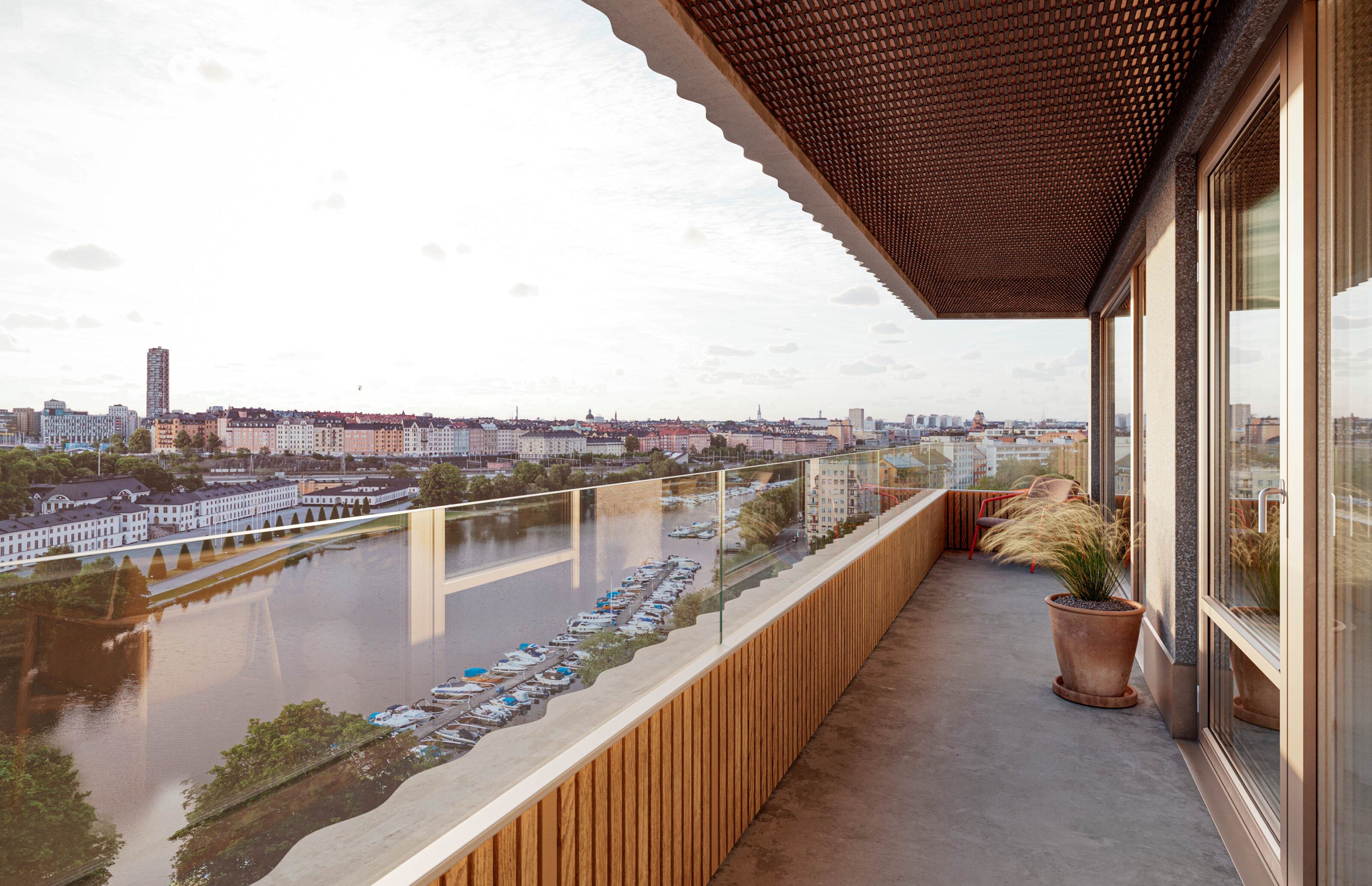
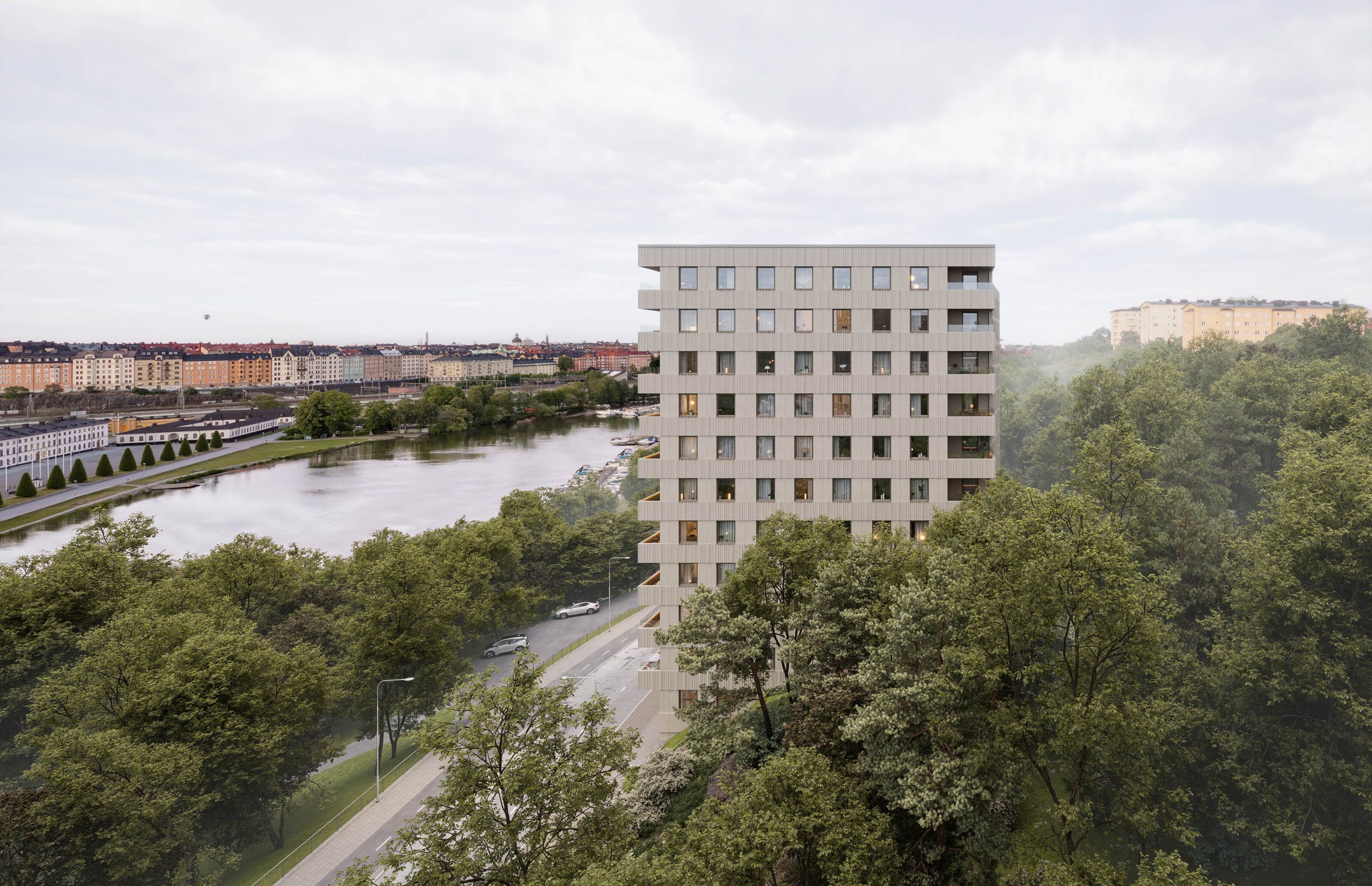
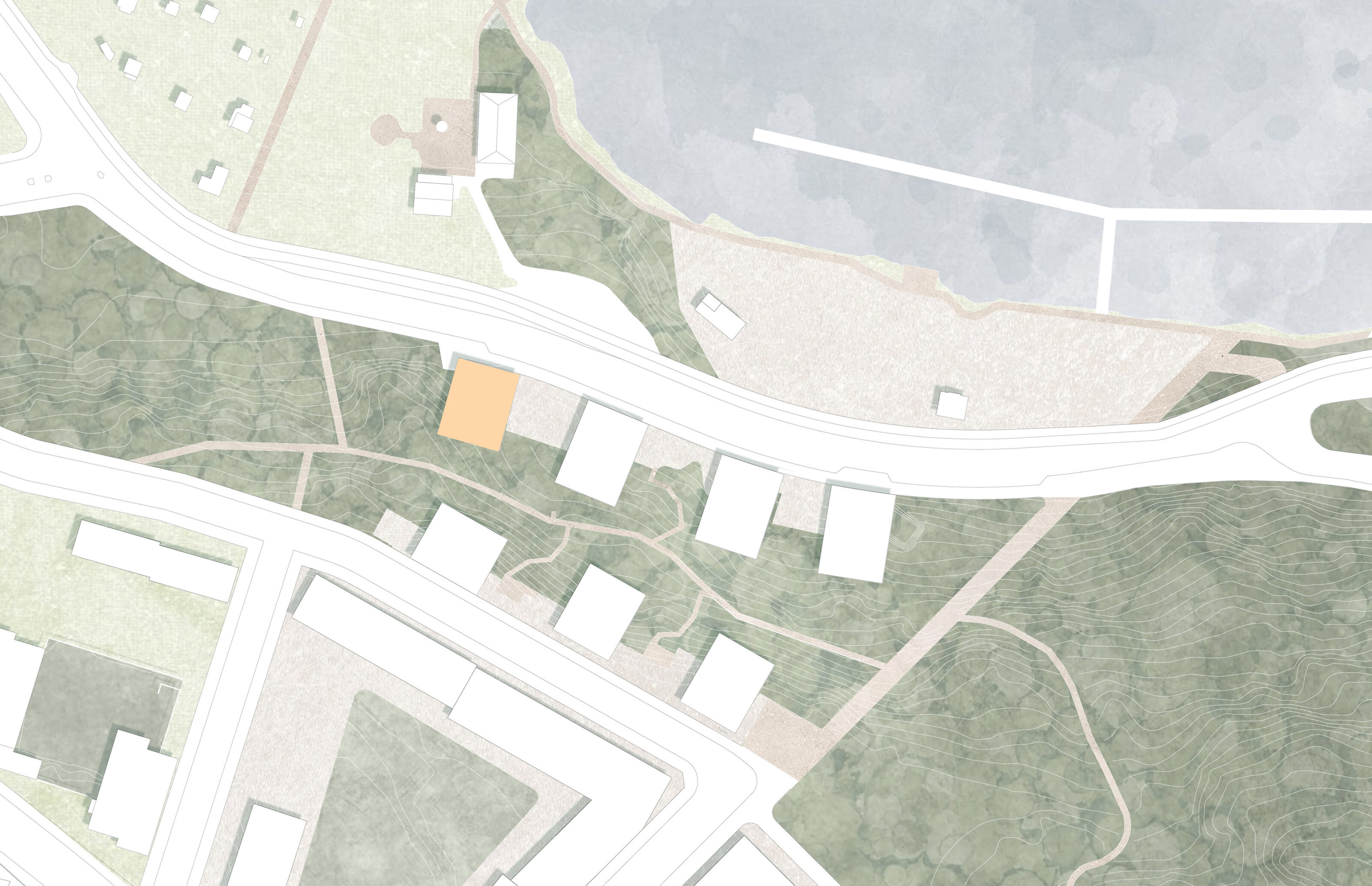
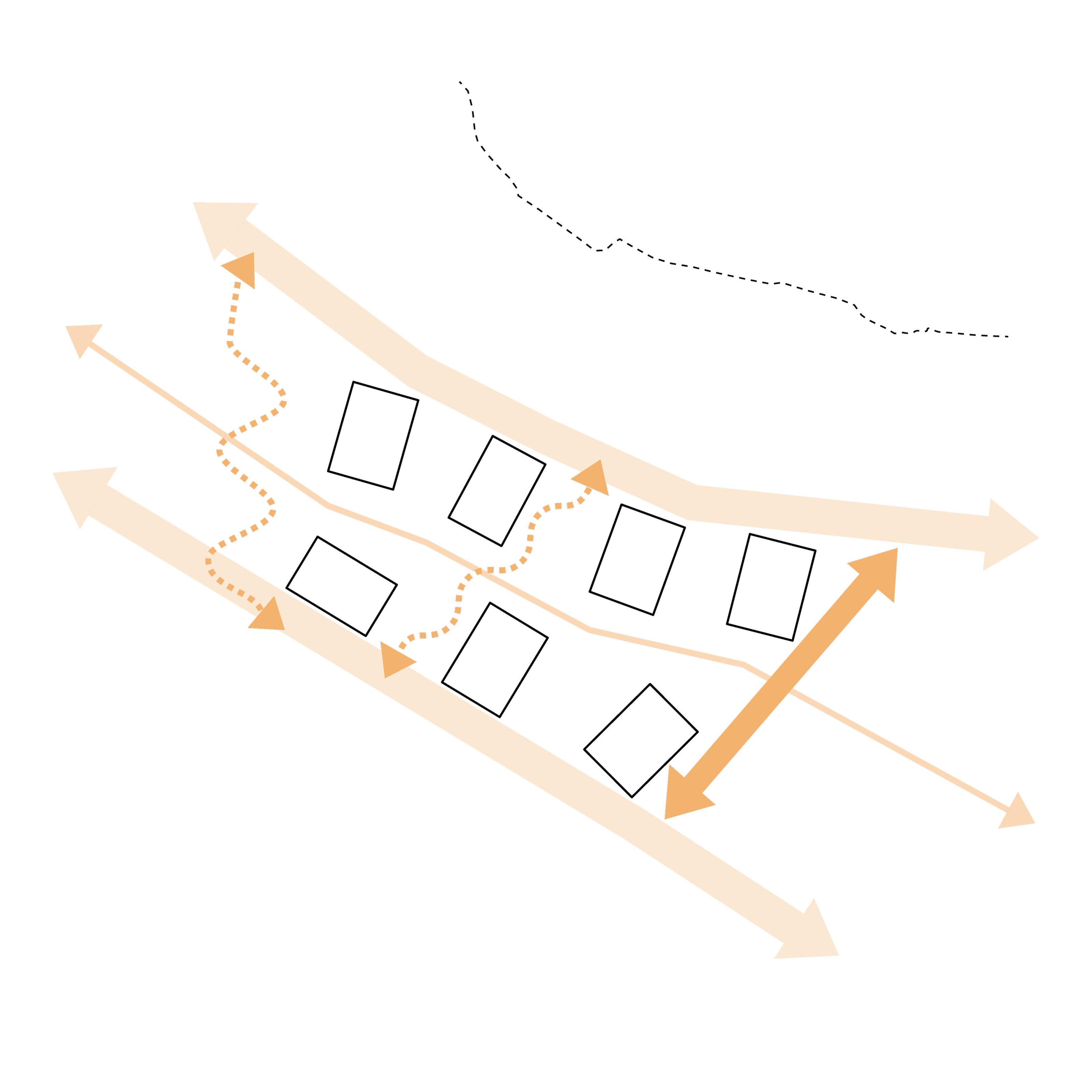
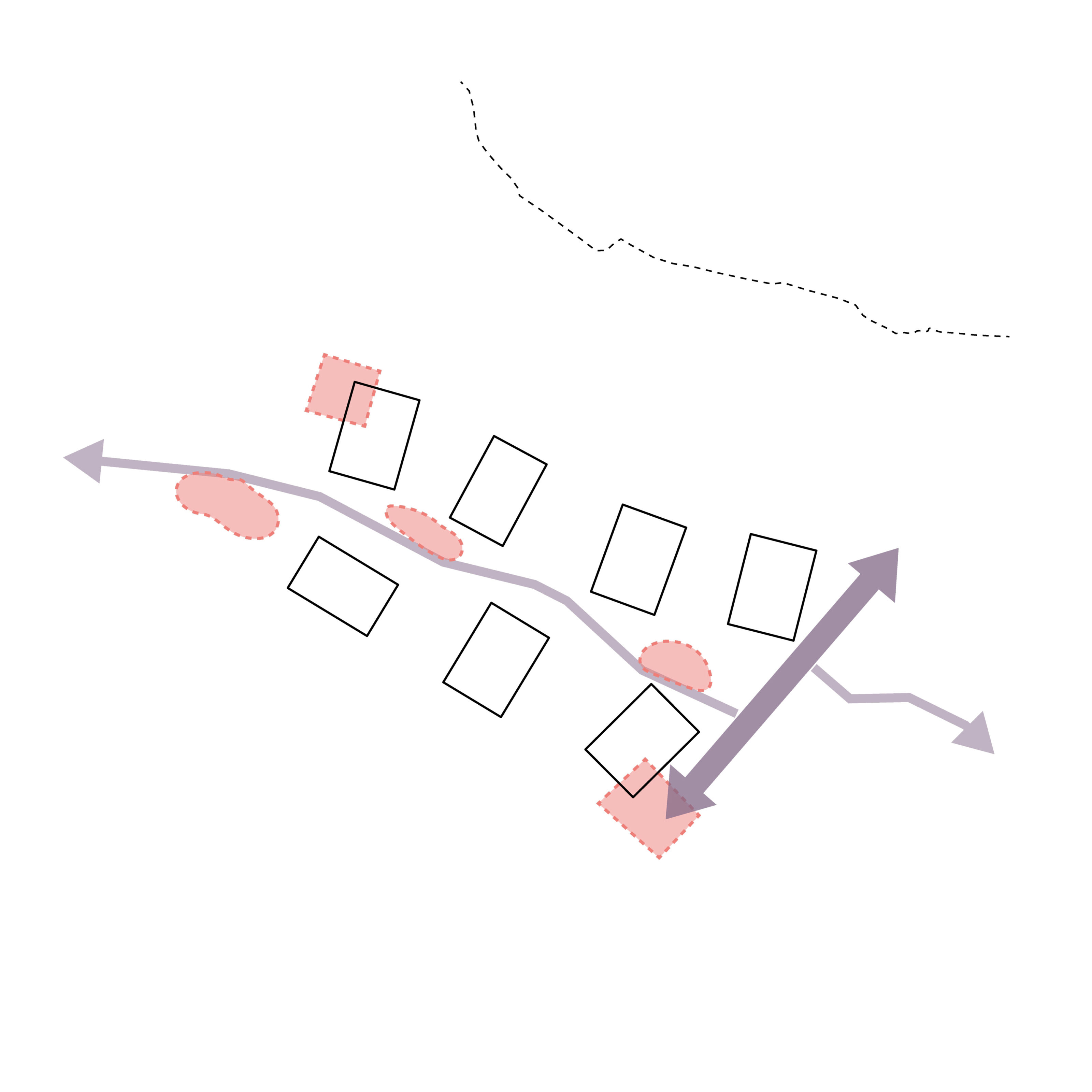
Branten is located within a green park corridor along the waterfront, overlooking Karlberg Canal and Karlberg Palace. The site lies on a dramatic slope, with a significant difference in elevation between the water to the north and the upper plateau to the south. The entire masterplan comprises seven standalone buildings developed by three different actors – three facing Tomas Tranströmer Street and four towards Hornsberg Strand. Between the buildings, small forecourts and viewing terraces are planned. A longitudinal walkway and a series of perpendicular stairs connect the various levels with the surroundins.
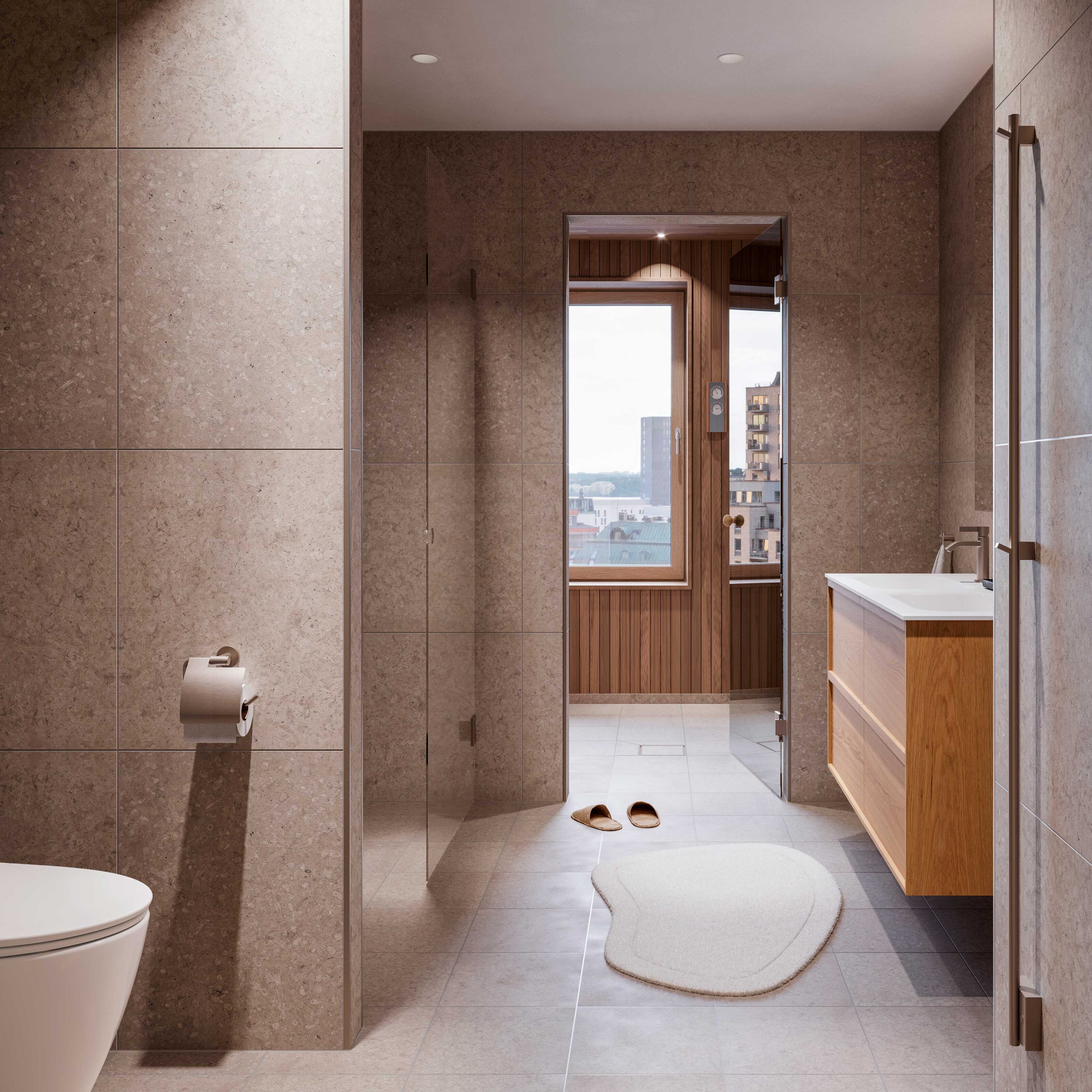
From the start, the project has pursued ambitious goals for architectural quality, focusing on creating solid, bright and good quality homes built from carefully selected, beautiful materials. It offers a living environment far beyond the ordinary, with sweeping views and a close connection to the surrounding landscape.
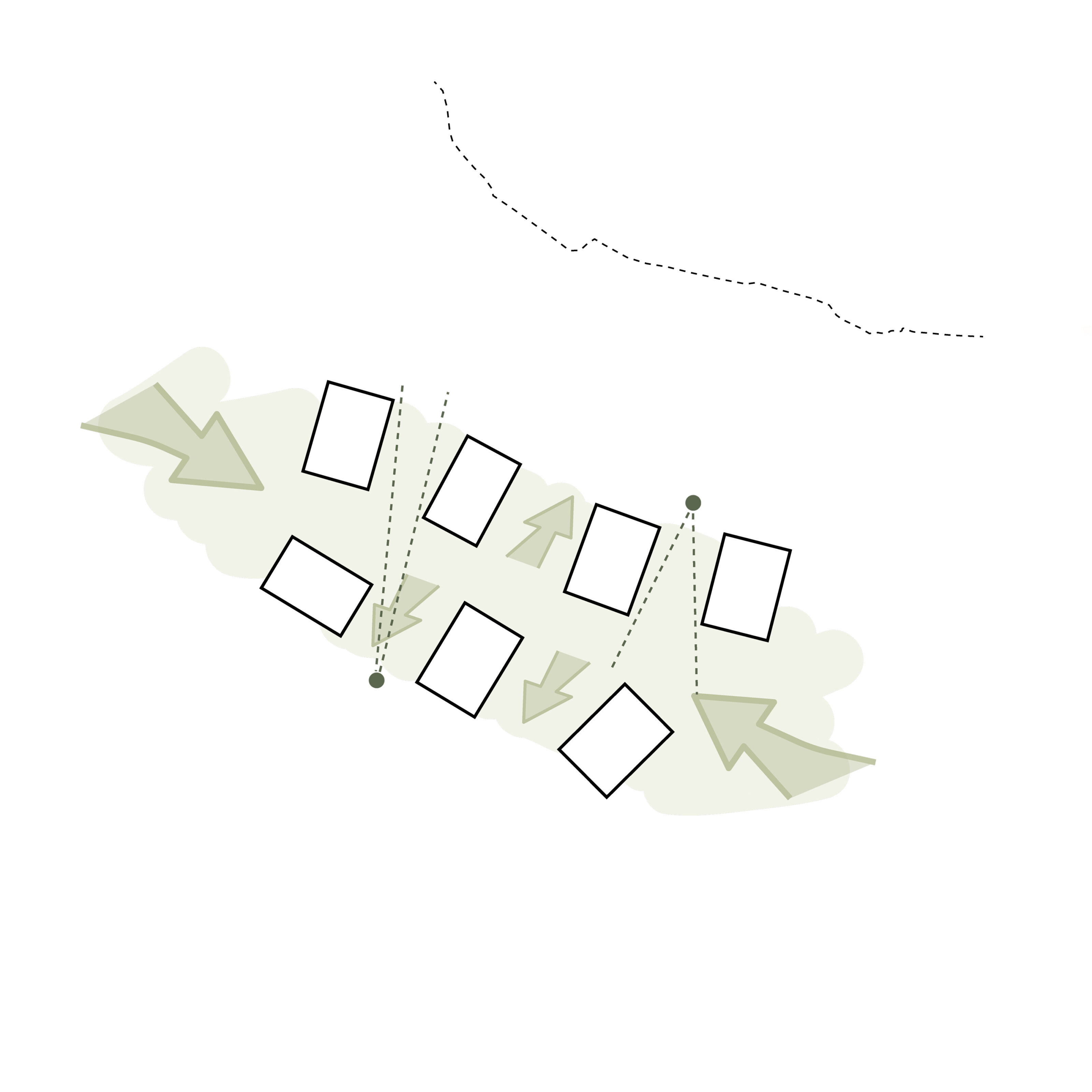
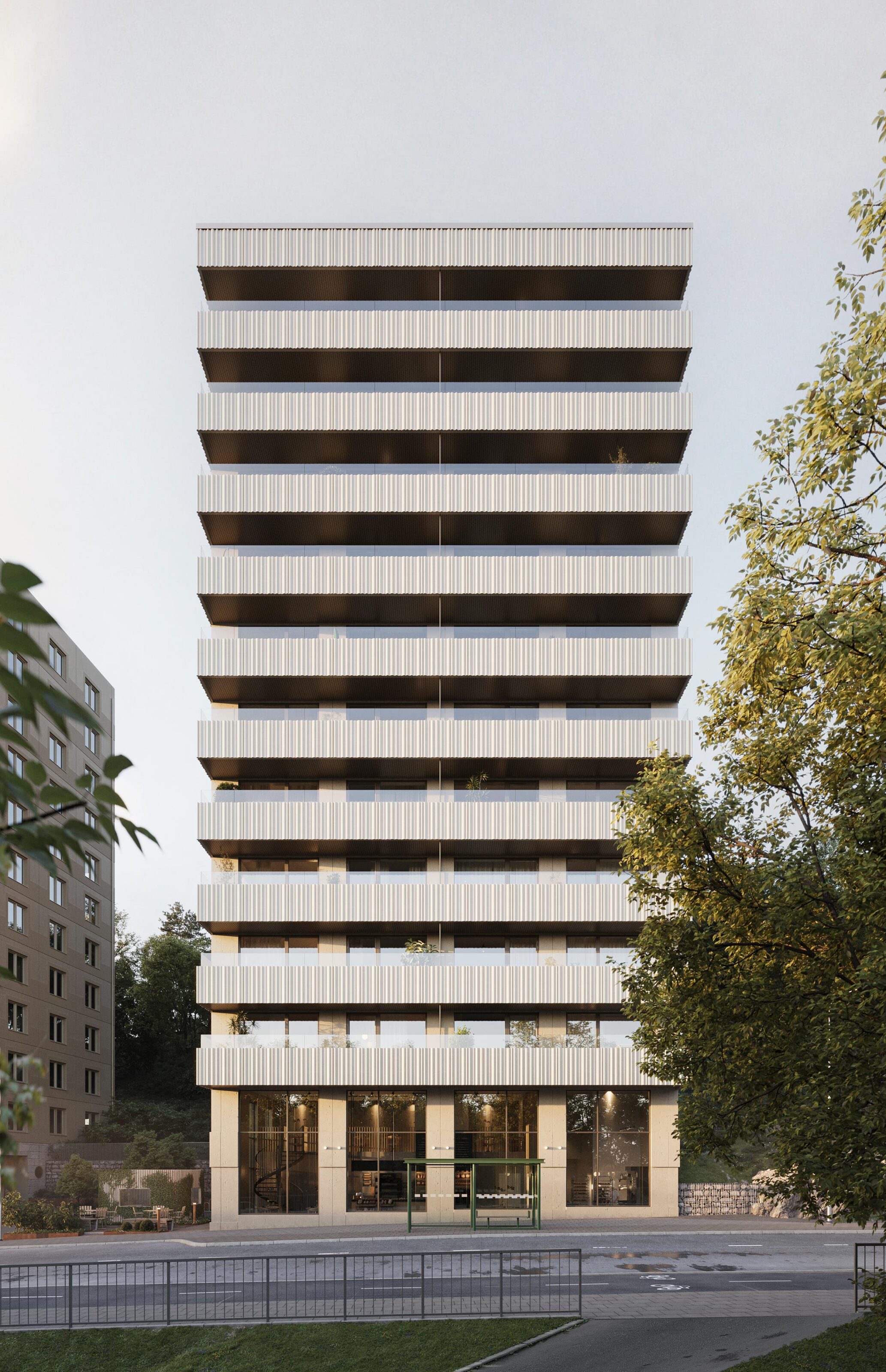
The architecture appears to rise organically from the ground, taking its inspiration from the waterside landscape. The building volumes allow for open views and visual connections, while the ground-floor retail units are intended to serve as a meeting place for the entire neighbourhood.
Open spatial connections
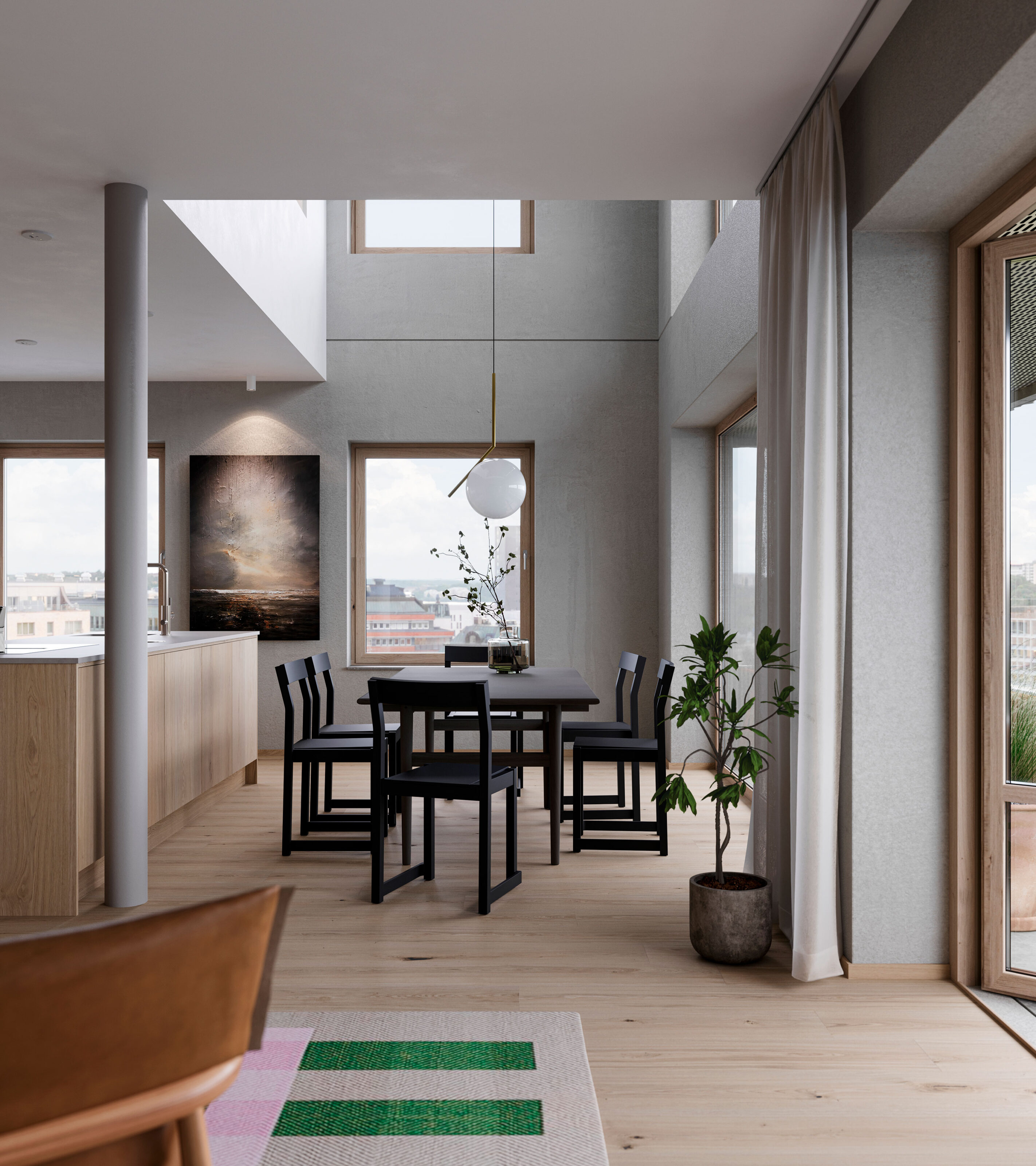
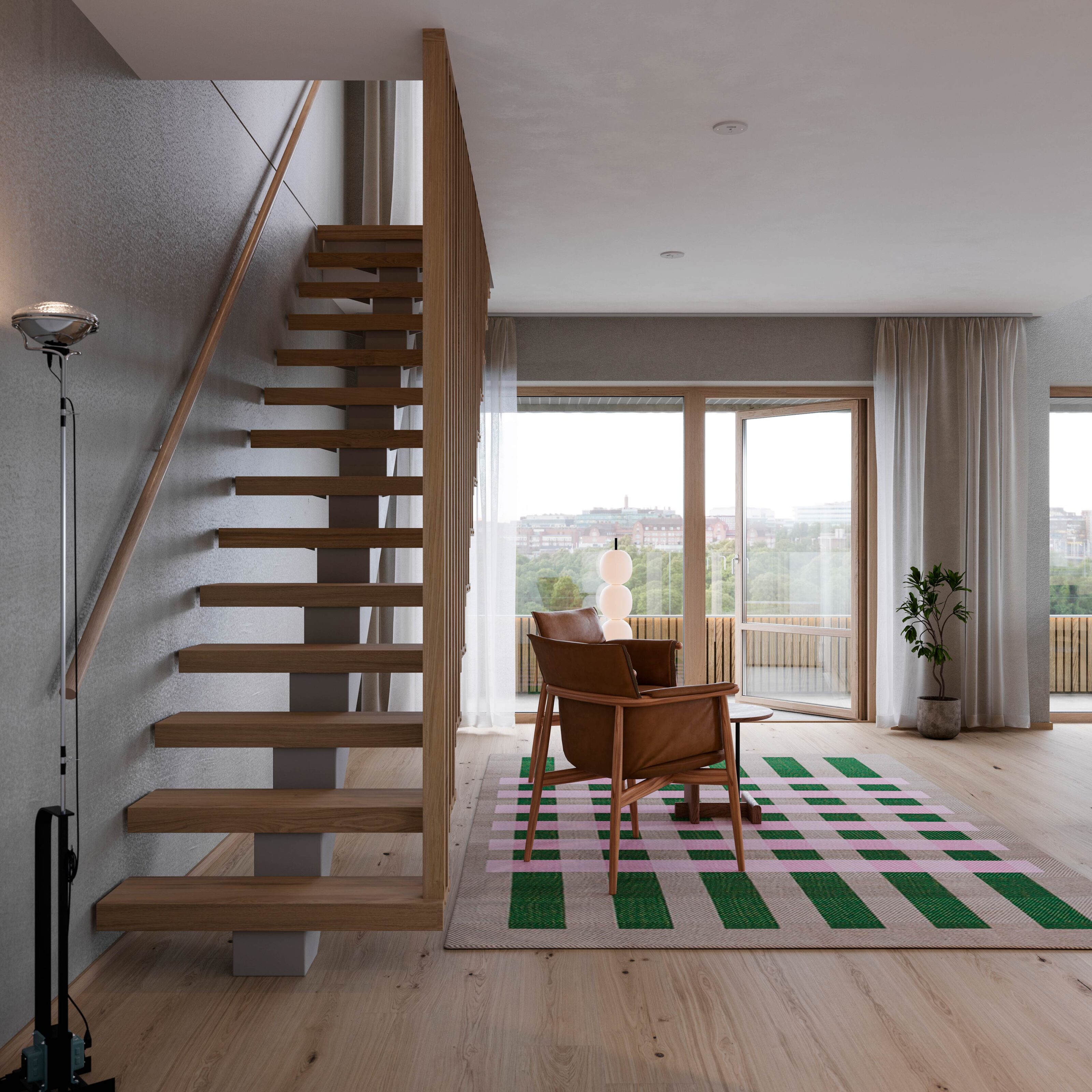
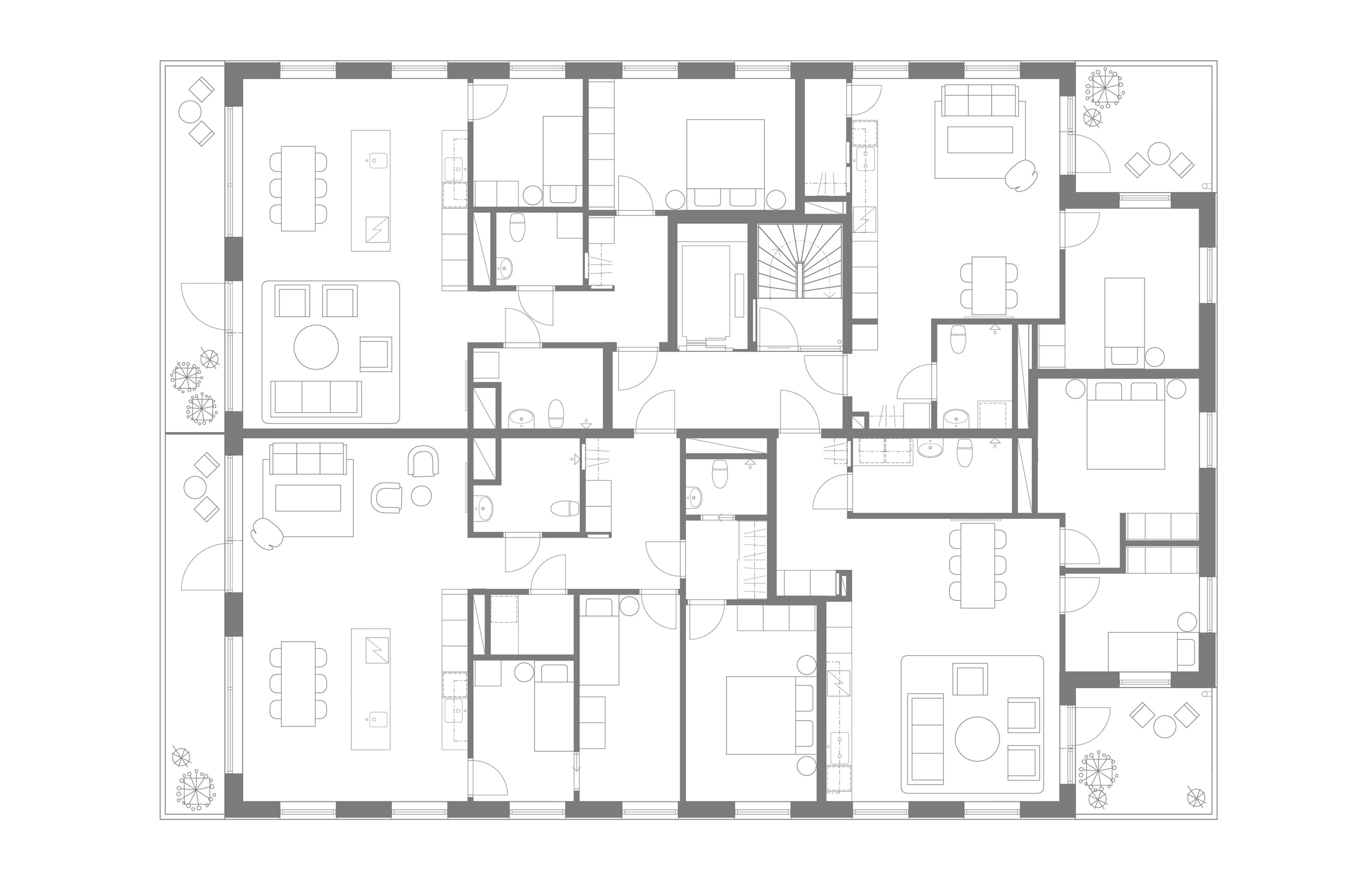
The vision is to offer homes with carefully considered details and craftsmanship, featuring high-quality materials. The apartments are designed to have an almost fluid character. Instead of strictly defined rooms, a more open layout is created, with generous social spaces. The sense of flow between rooms is continuous — one space merging into the next — expressed in different ways across the apartments and uniting the overall design.
The layouts provide bright corner apartments that focus on the qualities of everyday living, offering flexibility for spontaneity, celebration and togetherness. Practical solutions and well-integrated storage are thoughtfully incorporated throughout.
Balconies enhancing the expression
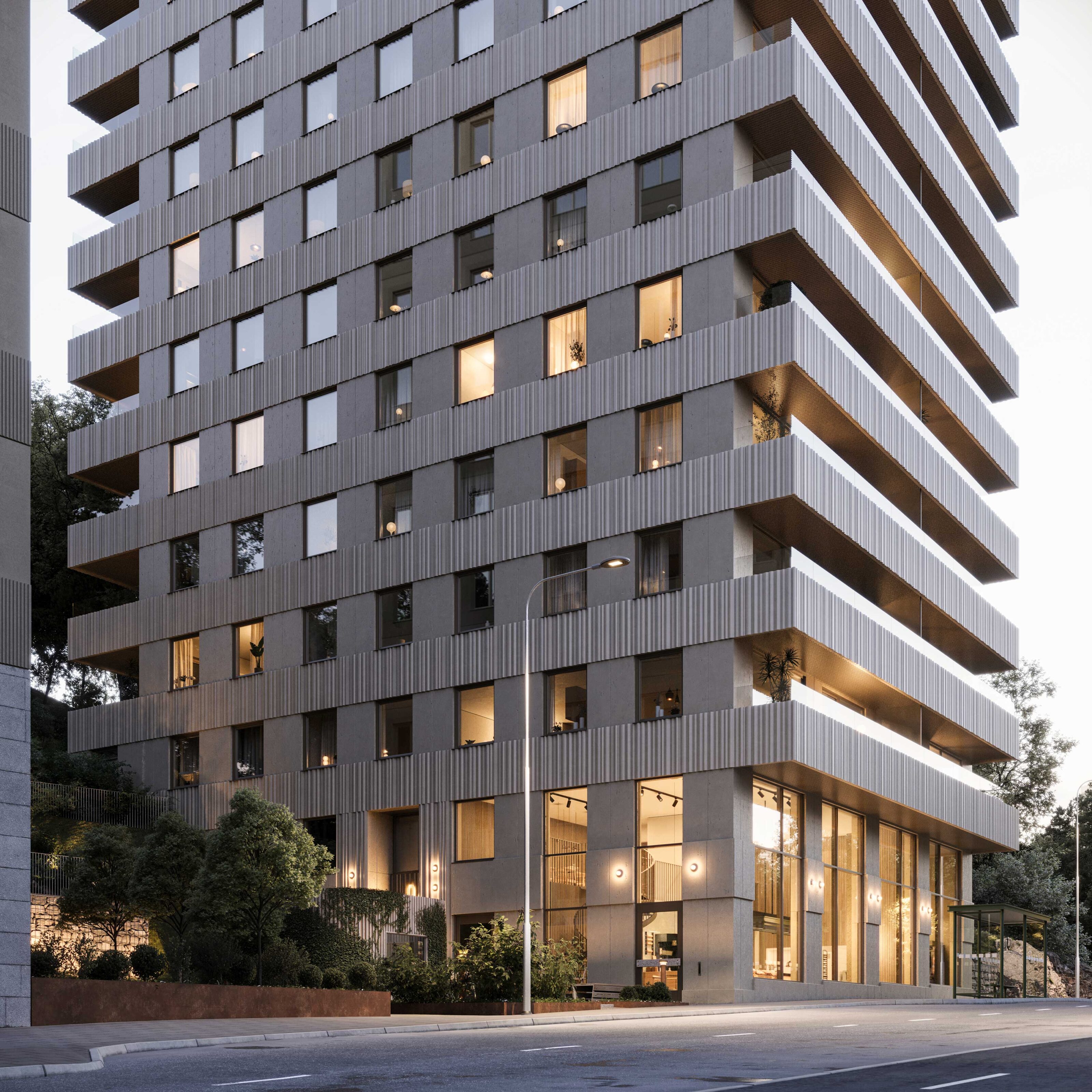
The balconies are experienced as an integral part of the living spaces, thanks to full height glazing that extends all the way down to the floor. This creates a greater sense of space, with the outdoor area becoming a natural extension of the interior. The inside of each balcony is clad in timber panelling, giving it a warm, natural character and featuring integrated lighting.
Robust, rational materials with a textile expression
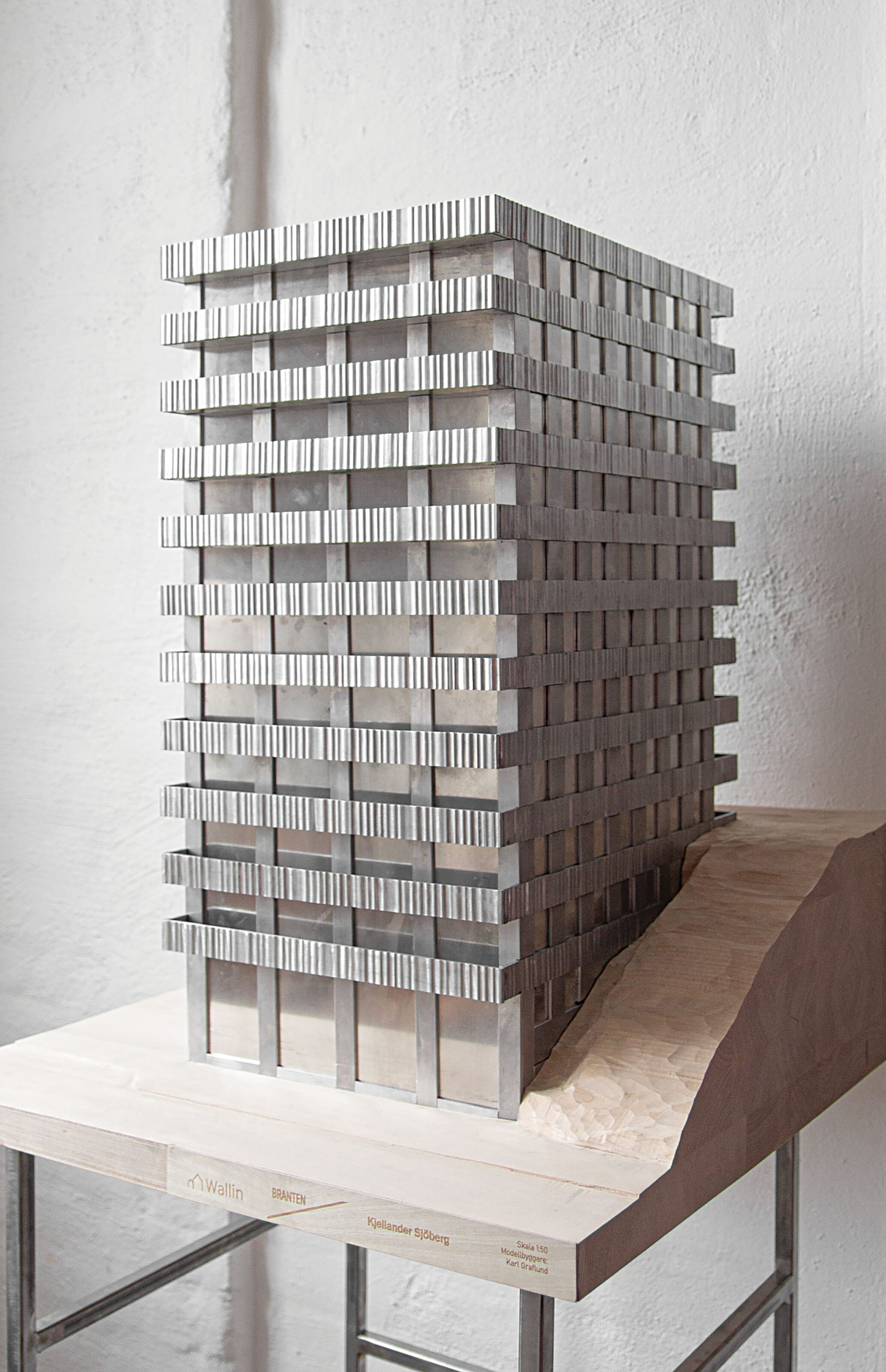
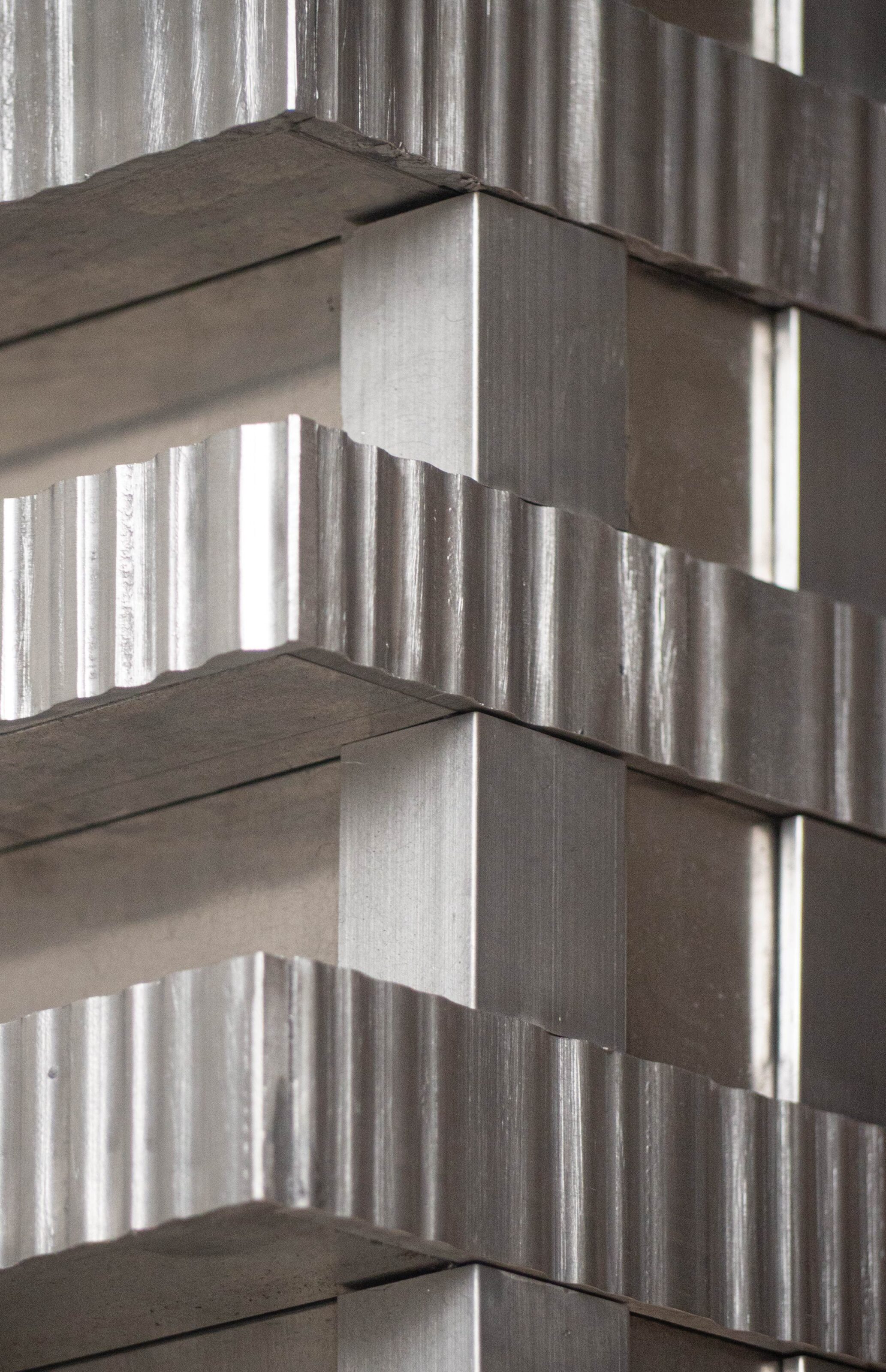
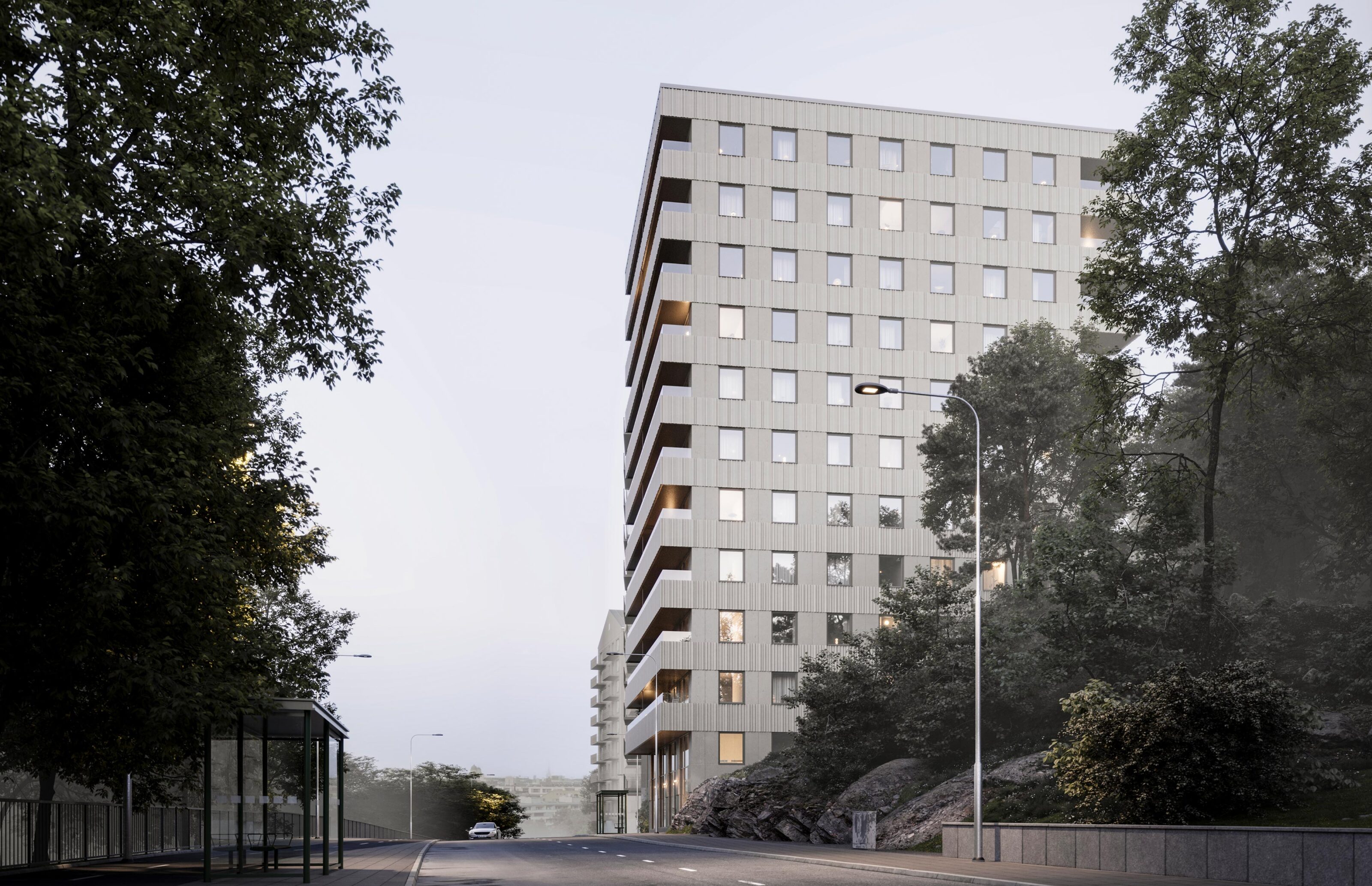
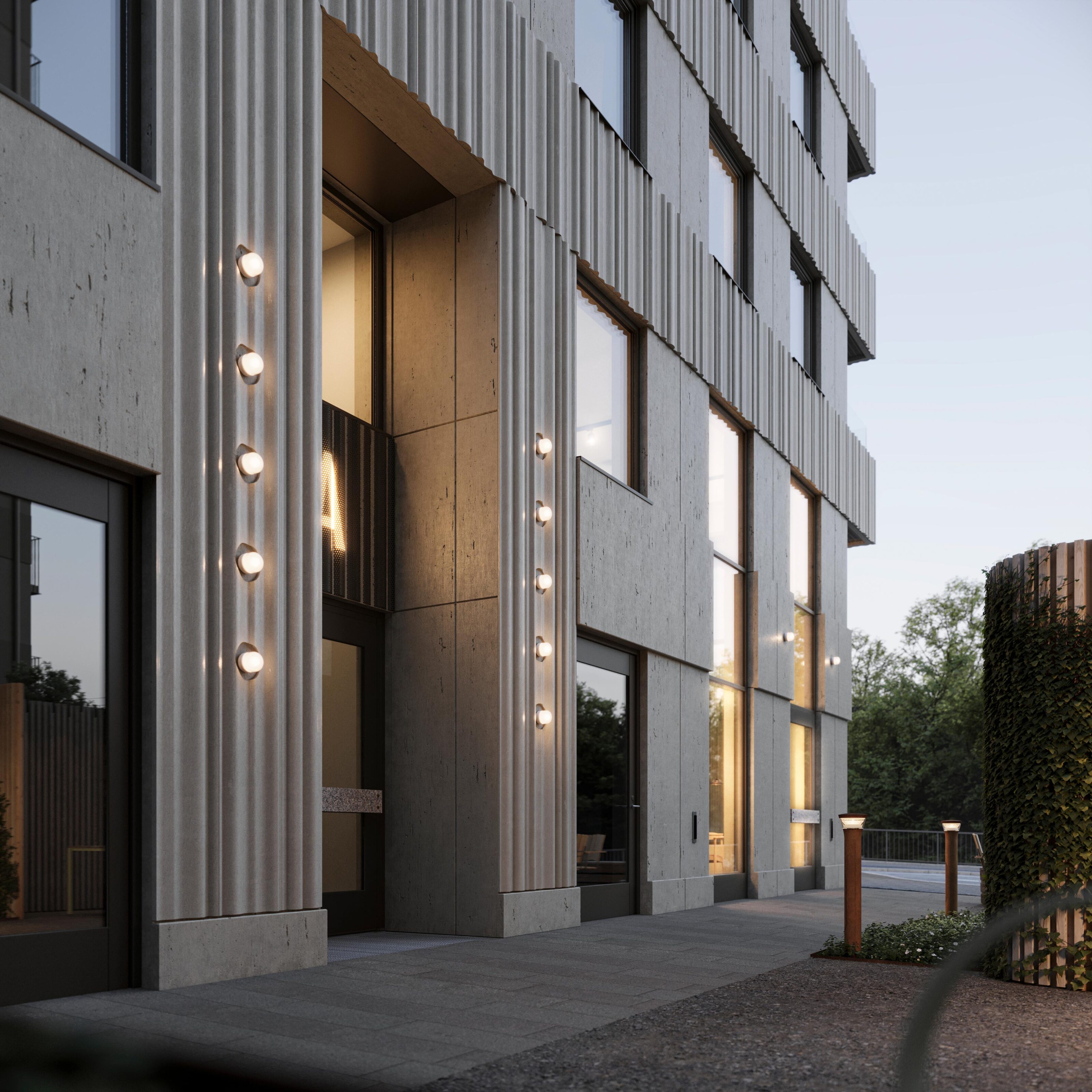
The building has a sculptural presence that will stand out clearly in the urban landscape. The ground floor is articulated with large open shopfronts and a distinct recessed residential entrance along the long side facing the entrance square. The exterior of the building has an almost textile-like expression, with a wave-patterned relief that gives a shifting appearance as daylight moves across the surface. The articulated horizontal bands of the façade are interwoven with a vertical pattern.
Robust, rational materials have been chosen and carefully assembled with precise detailing. Tectonically, the exterior is conceived as a system of prefabricated elements joined together with integrated seams. The concrete façade has a warm, glazed tone and a wave-moulded surface texture reminiscent of limestone.