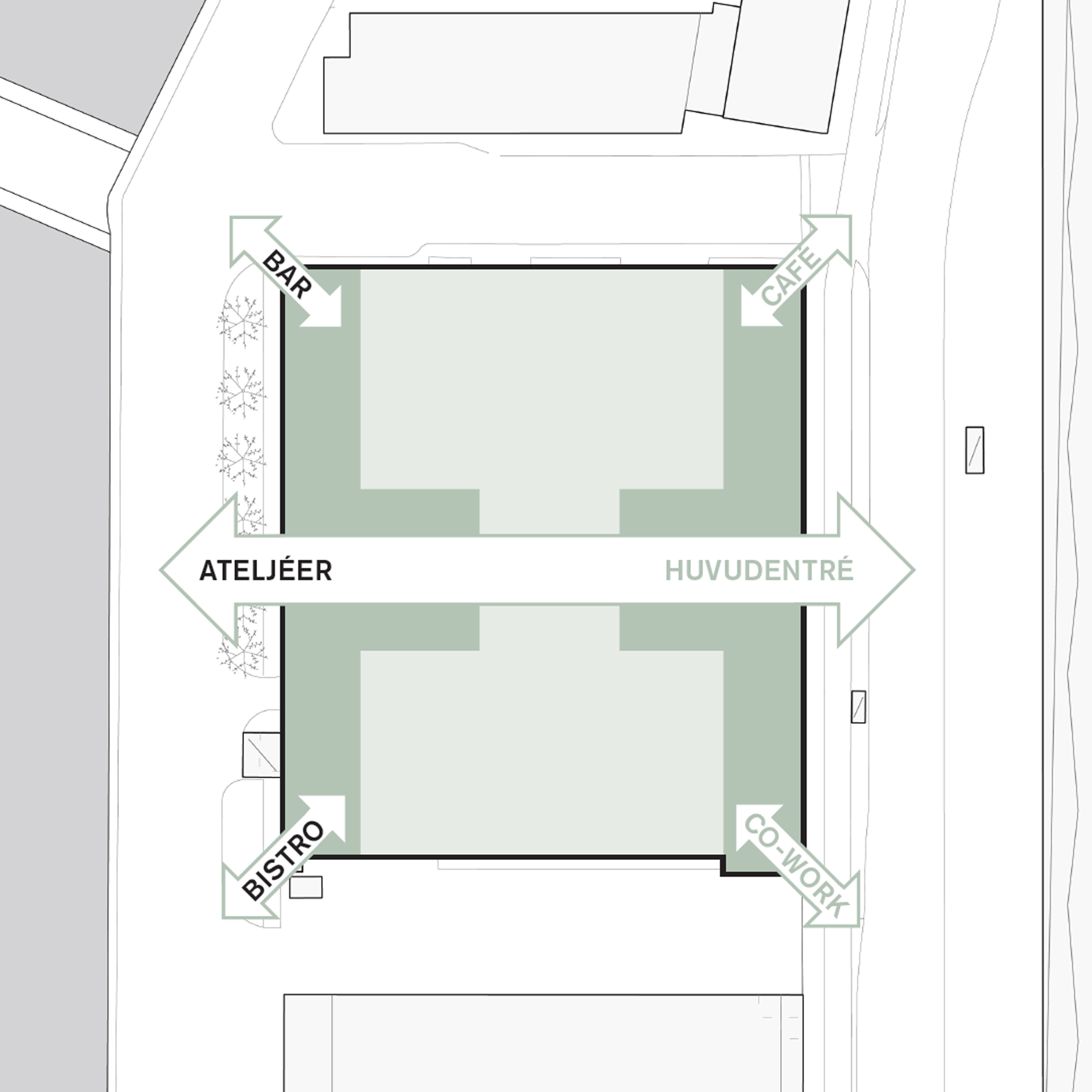
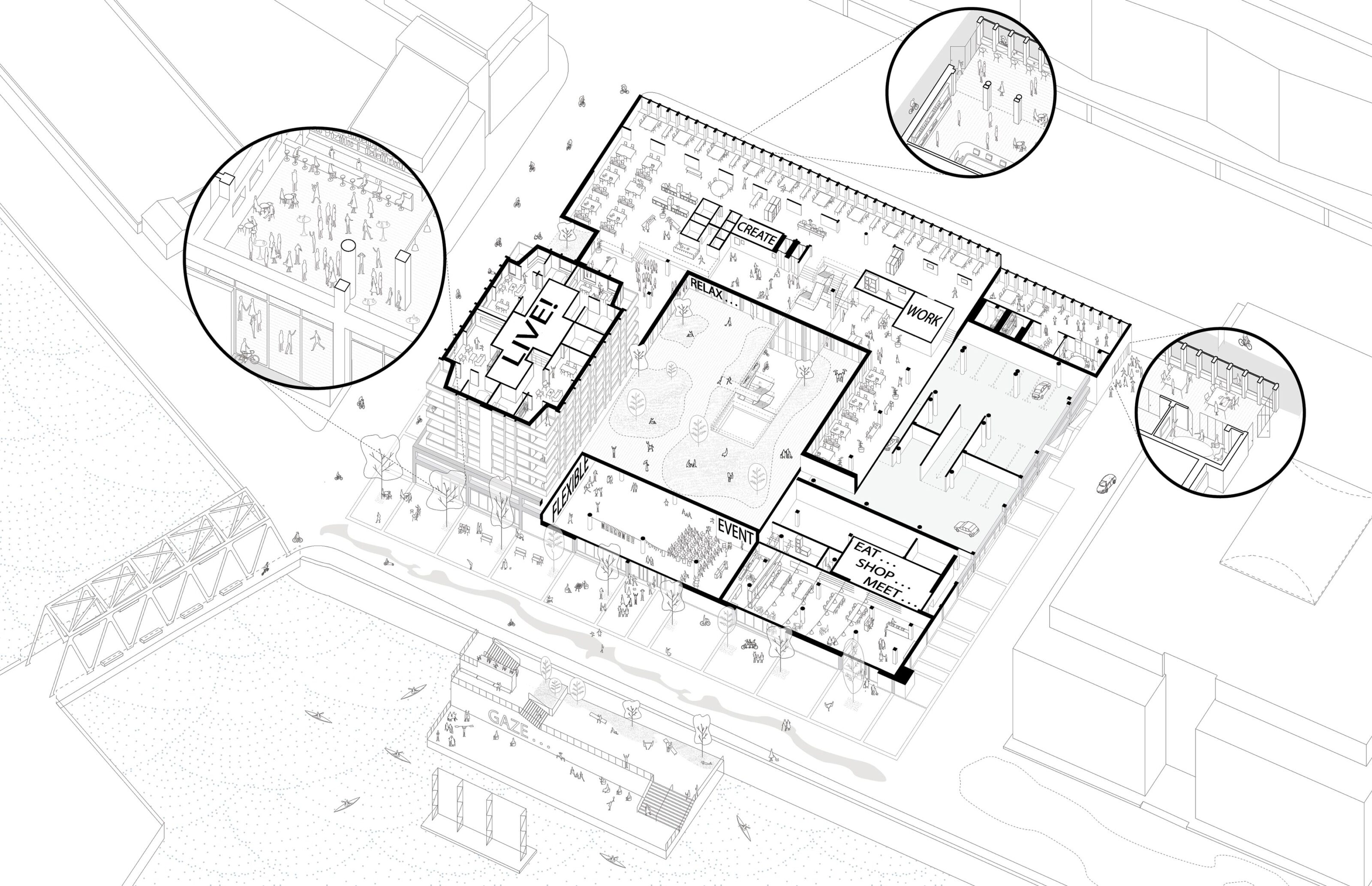
From Nordenskiöldsgatan, the office block entrance is connected to the quayside through an internal street. The commercial spaces facing the street benefit from double-height ceilings centrally and in corners and can be rented separately or used for common foyer functions. Robust spaces that can change over time are placed on the block’s short sides. The residential properties have separated entrances, with corner premises on ground level, and a flexible middle section facing the quay that can house a restaurant or cultural offering.
Trollhättan
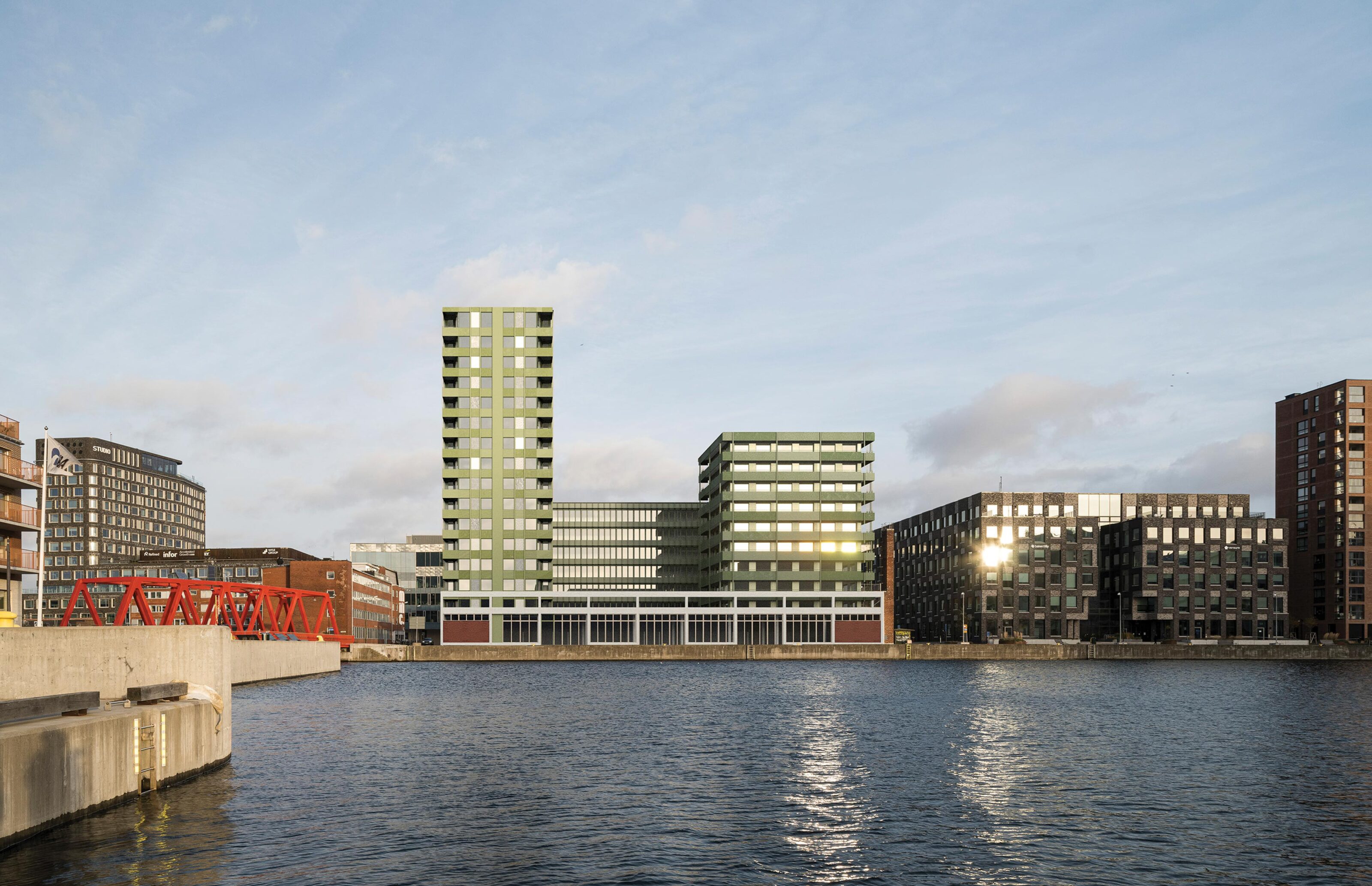
Development and design of the Trollhättan 6 city block into a mixed-use urban quarter at Beijerskajen on Universitetsholmen in Malmö, Sweden. The scheme proposes a hybrid architecture that combines workplaces, housing and services, while the ground floor contributes to vibrant urban life along the quay and in the surrounding streets.
The ambition of the brief is to explore the careful use of existing resources, with an ambitious sustainability agenda. The architecture develops the distinctive character of both Malmö and the site, and highlights the area’s heritage of historical port operations.
Team Superlokal with Kjellander Sjöberg, Förstberg Ling and critical friend, We Made That, plus Ramböll won the invited architectural competition with four selected teams, and will develop the winning proposal further into a completed detailed plan with planned construction start in 2027.
The proposal was judged as the most convincing in combining the site’s cultural-historical values with contemporary urban development. The competition proposal is described in more detail below (2024).

A blue campus in the heart of the knowledge city
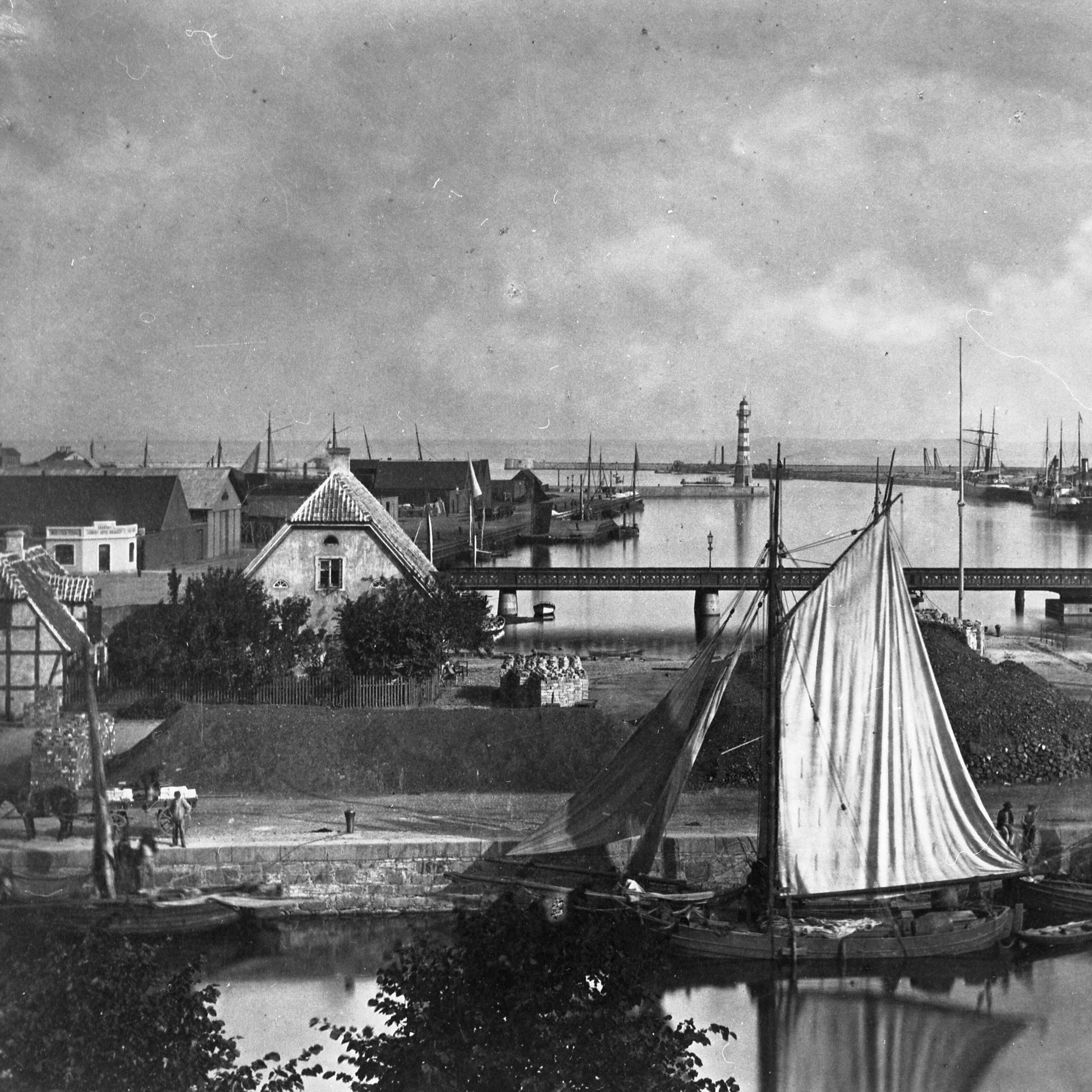
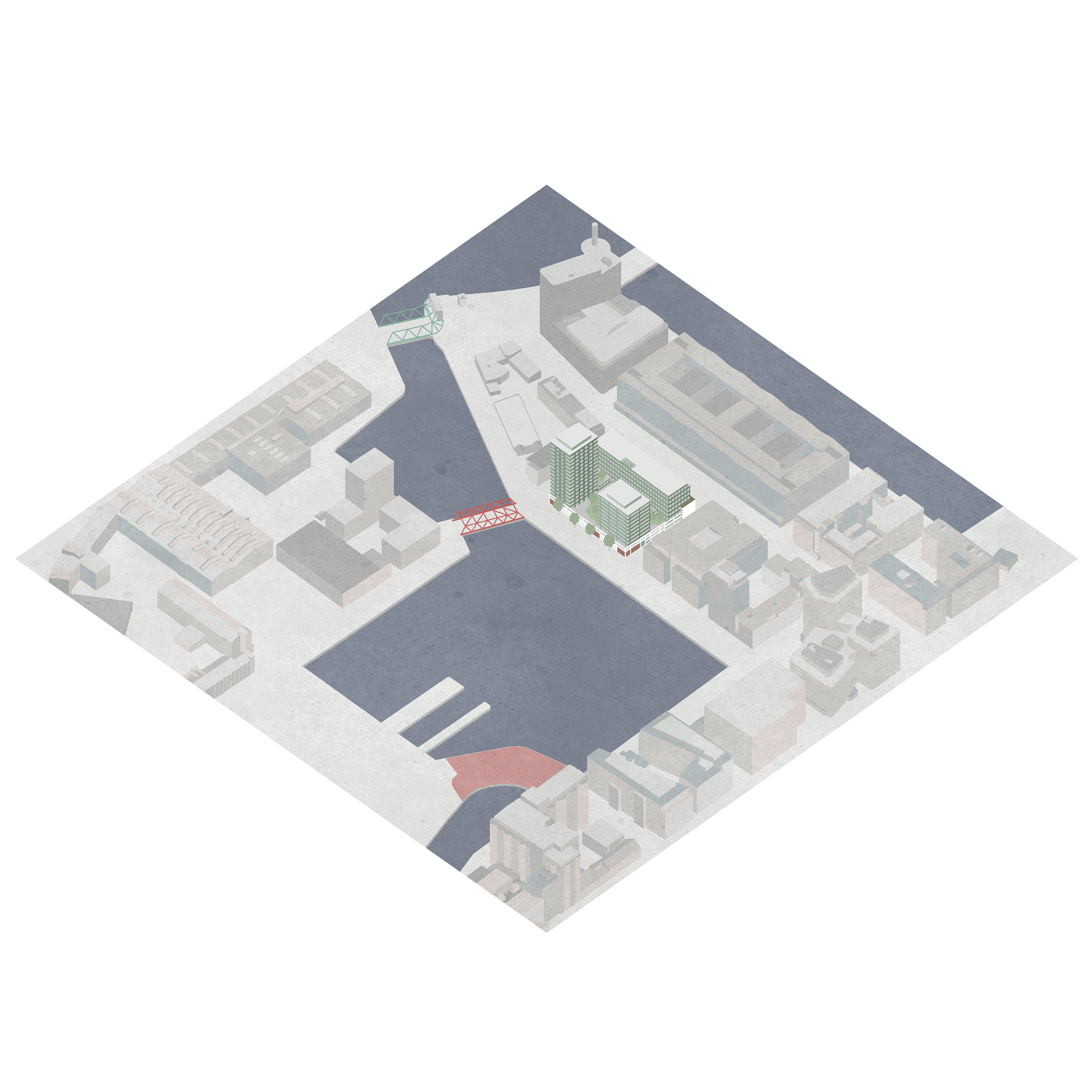
The Trollhättan 6 city block has a prominent location at Malmö’s Southern shipyard basin along Beijerskajen, and becomes part of an emerging urban context where public space is upgraded with green areas and quality of experience. With new connections, bridges and pathways, the water space becomes an integrated part of central Malmö, with Varvsstaden (a former shipyard) on one side and Universitetsholmen (the former port) on the other. Historically, the site has played an important role as a freight yard, where ships docked, and goods were loaded and unloaded. With new activities in the form of housing, offices, restaurants, services and Malmö University – the area is fast becoming a blue interconnected campus in the heart of Malmö’s knowledge city.

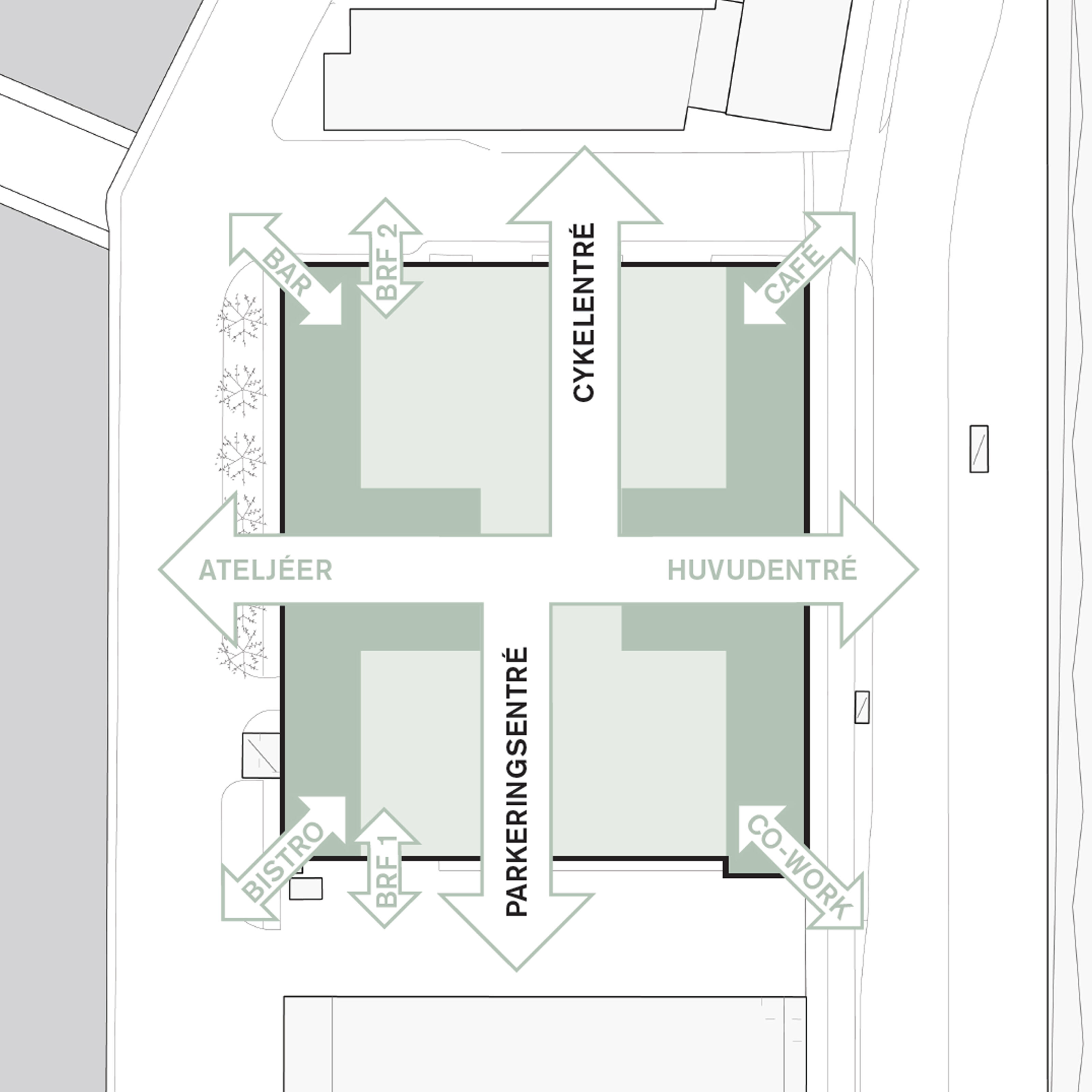

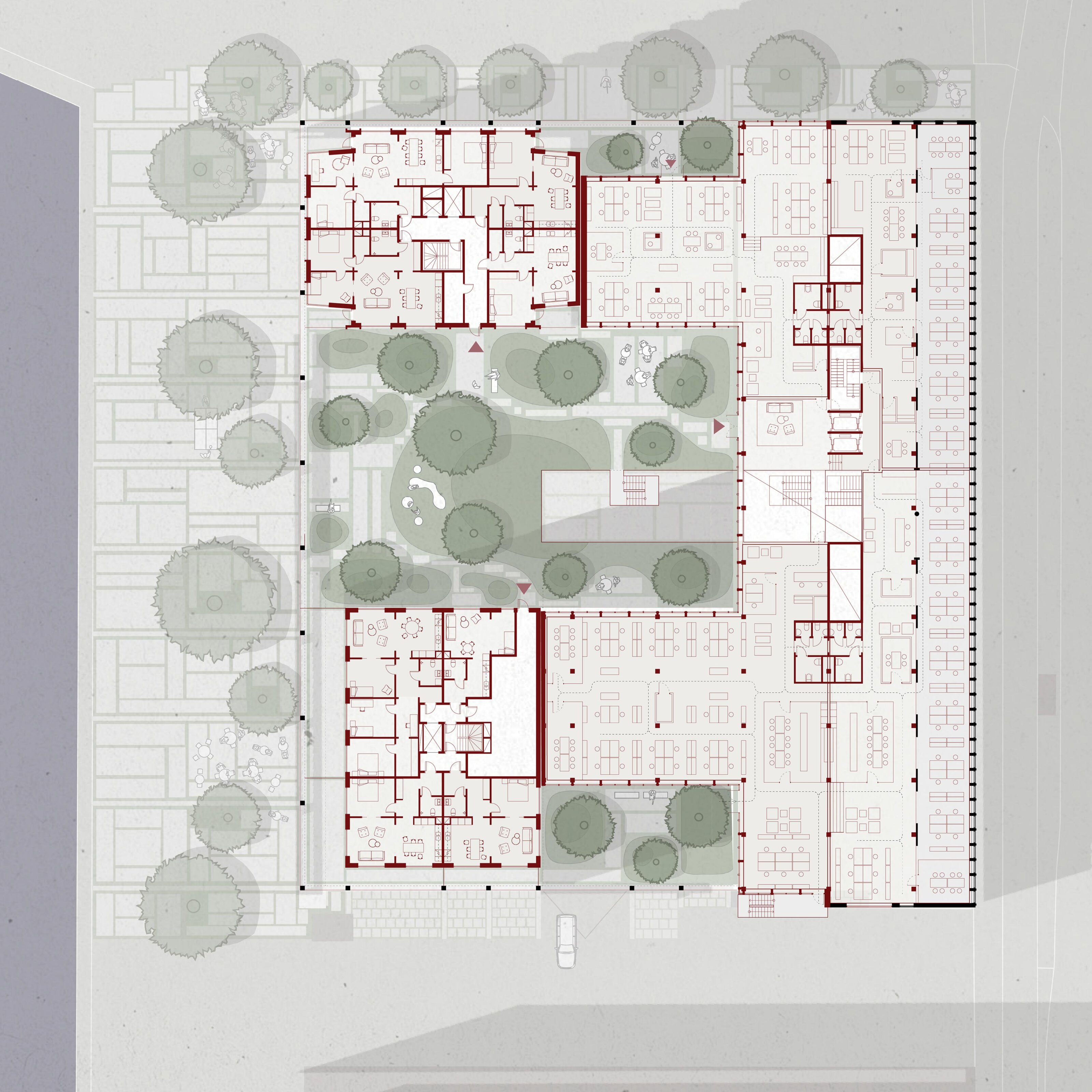
Living ground floor – organisation, connections, flexibility
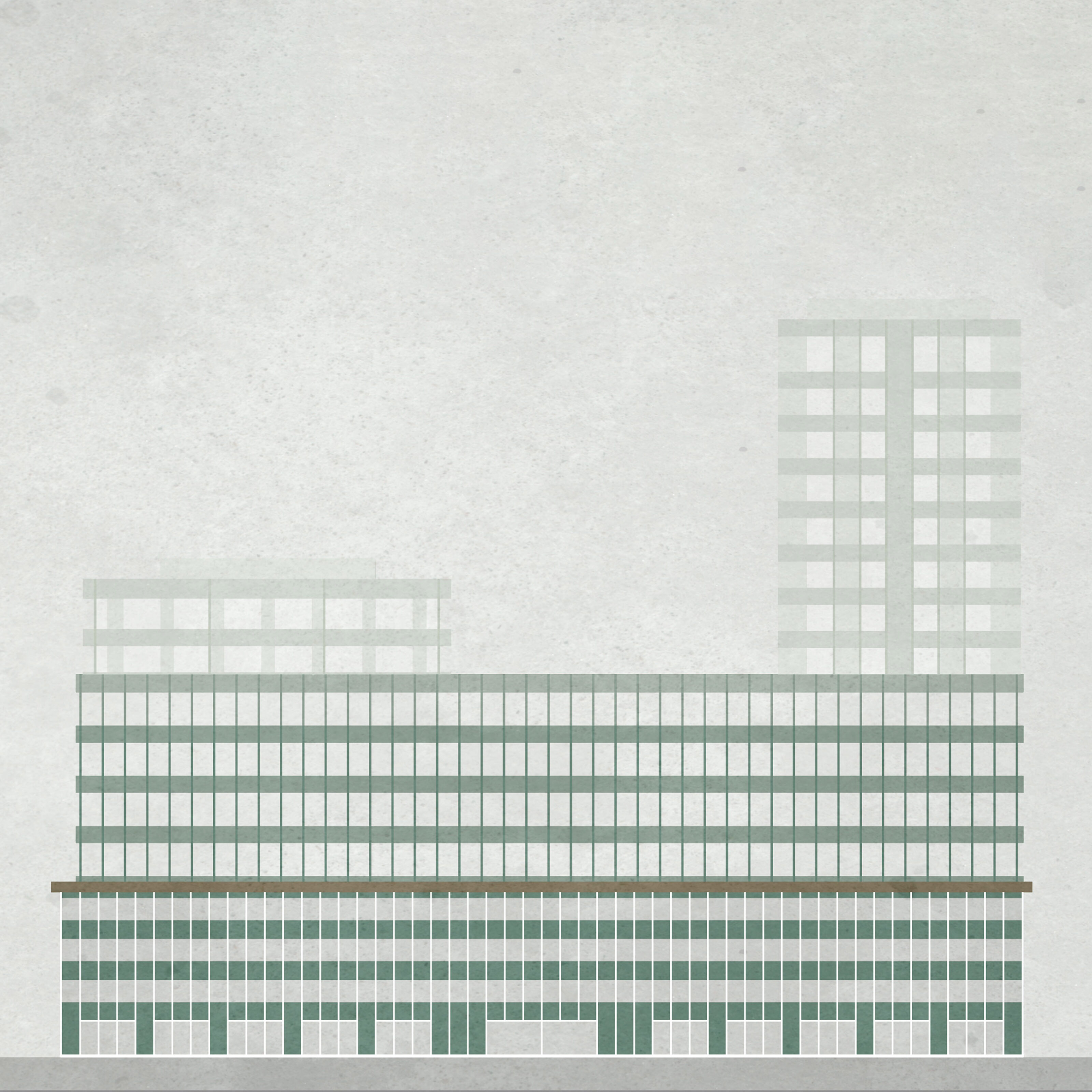
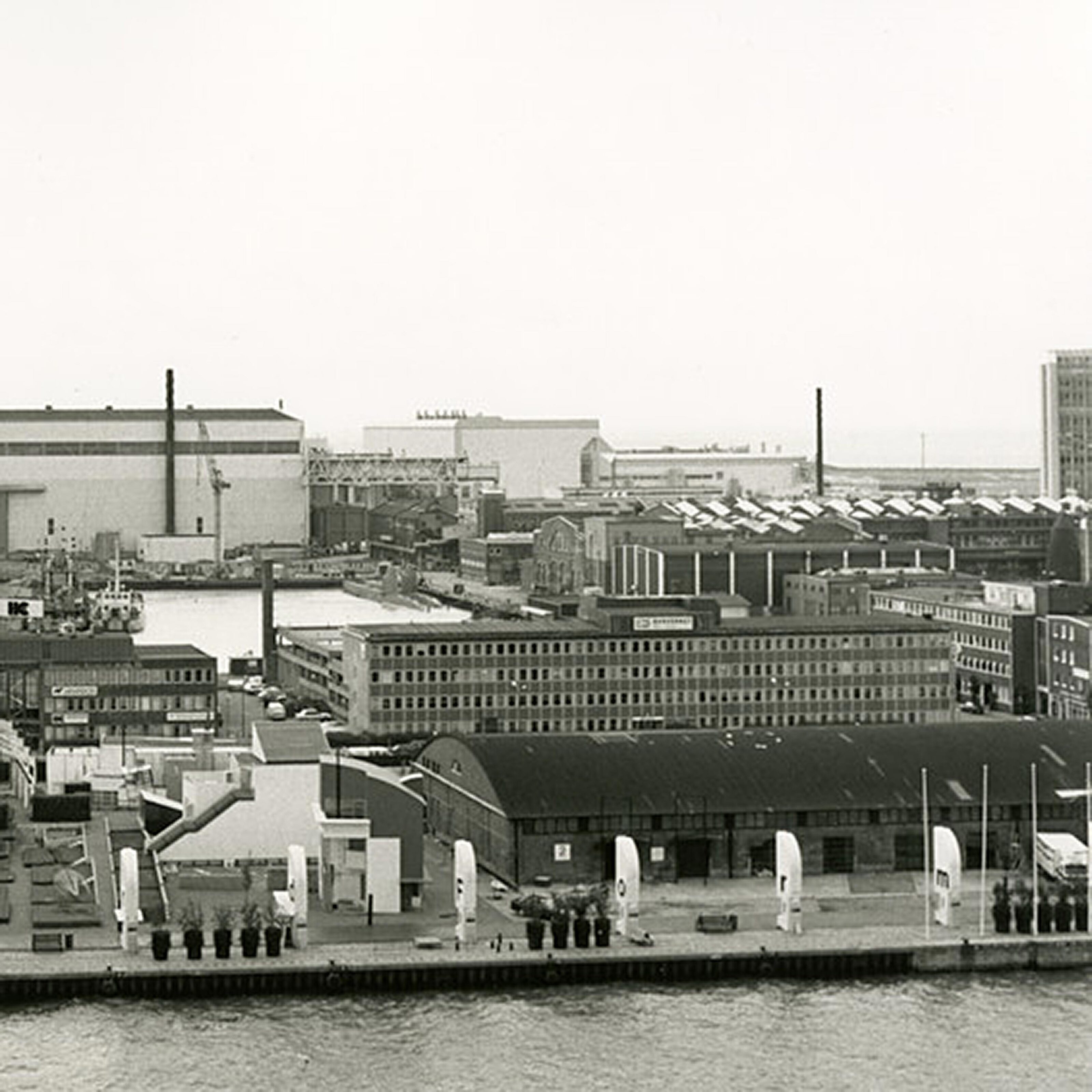
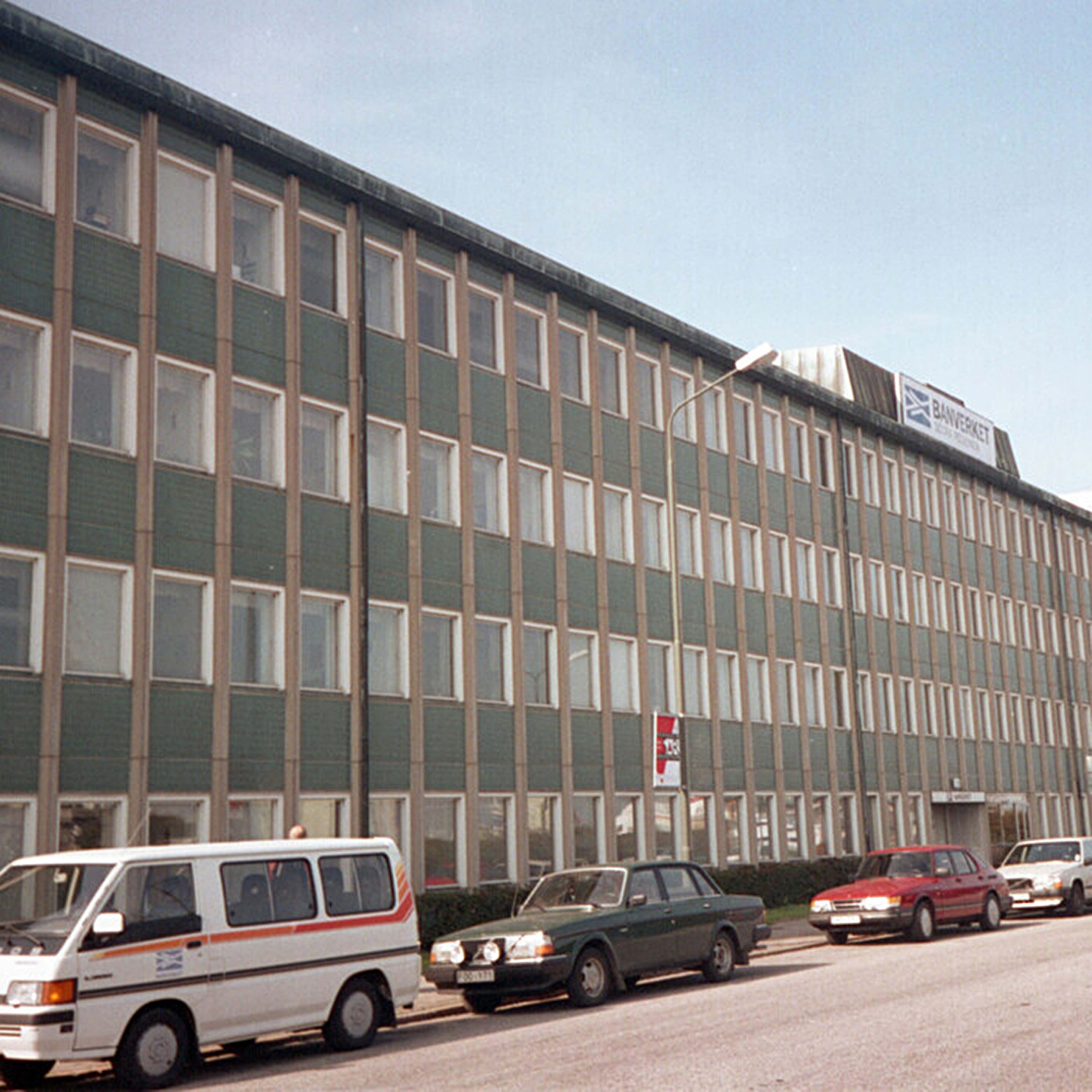
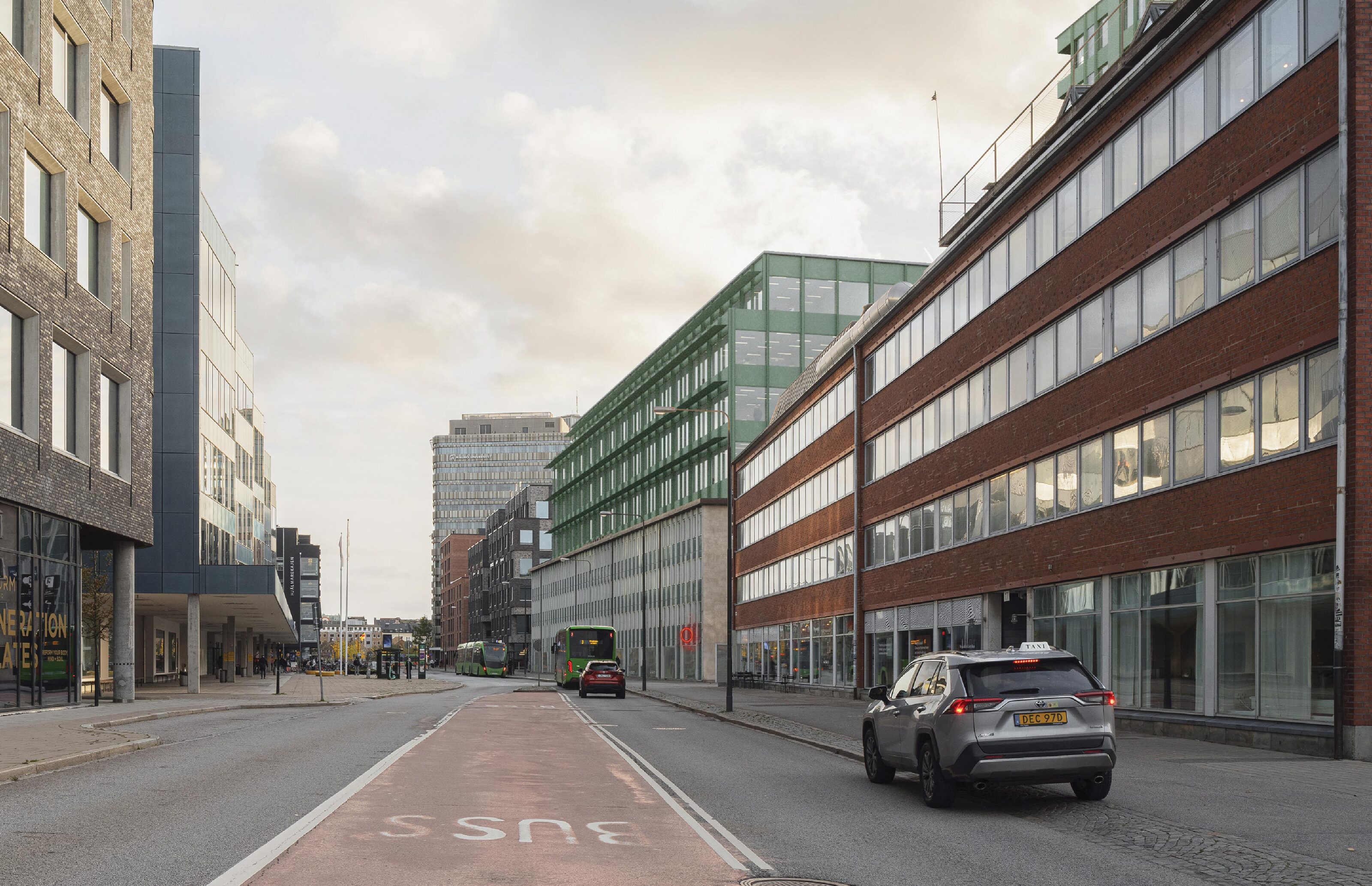
What already exists?
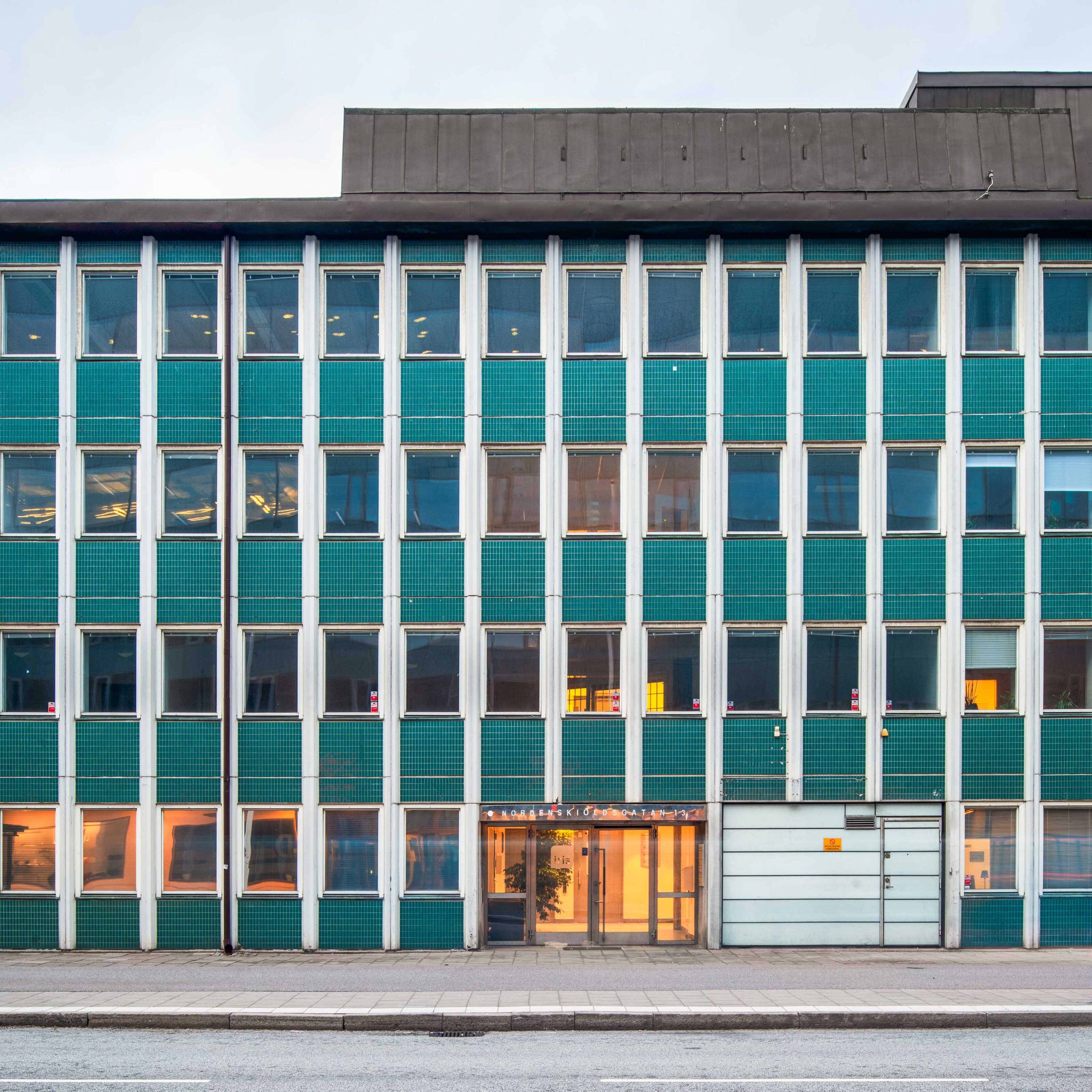
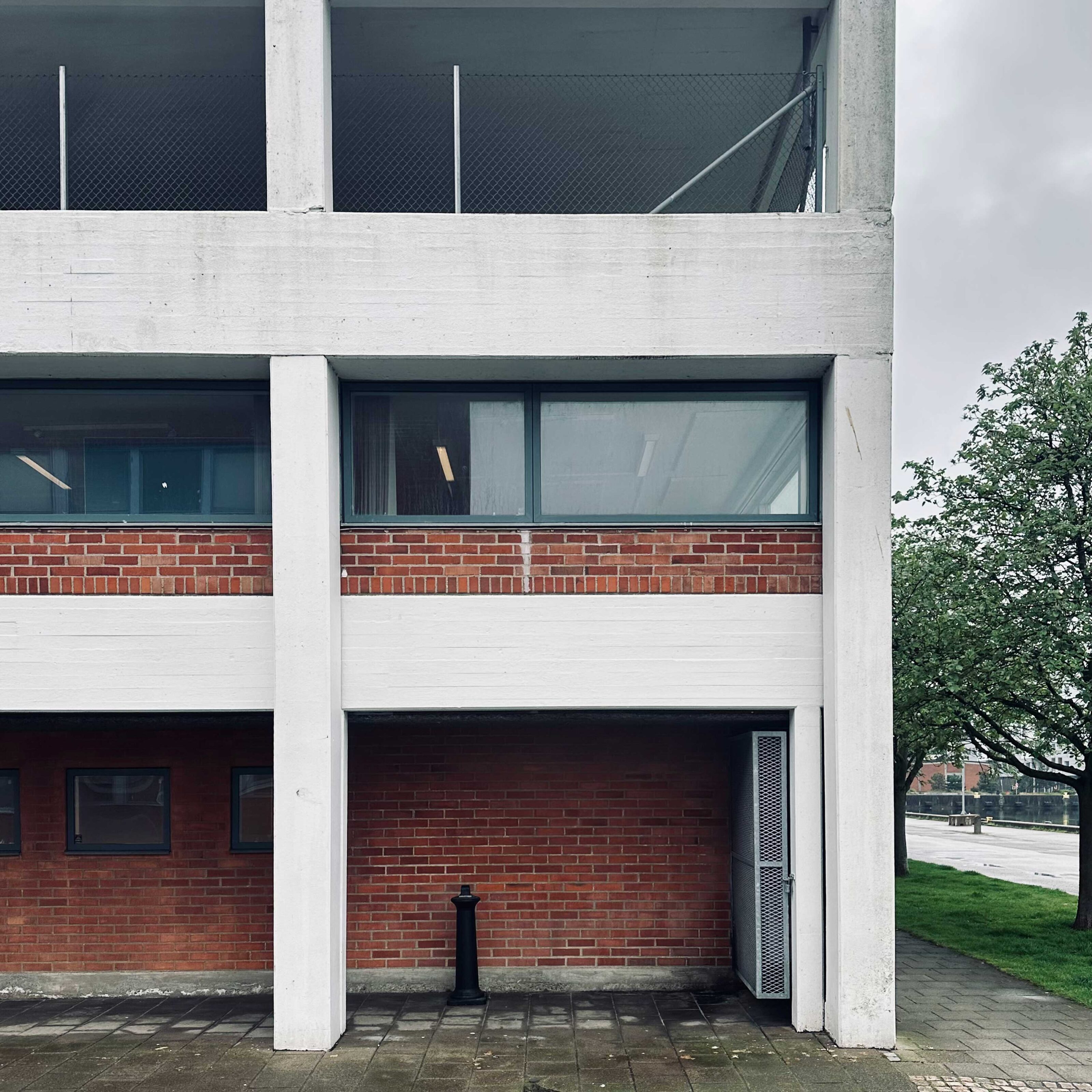
The project aims to create approximately new 100 housing units and 10,000 sqm of office space. New additions are balanced against what is already built, programmatically, structurally and aesthetically. Through analysis of Trollhättan’s cultural and historic significance, and of its tripartite volume, with rational expression and horizontal-vertical structures – the foundation is laid for a transformation and future architectural detailing. Our sustainability strategy is based on what we can use; add as little as possible and preserve building components already in place to a high degree, with minimal added resources, such as new foundations. Added building components have been chosen with care, based on their degree of renewability and low carbon footprint.

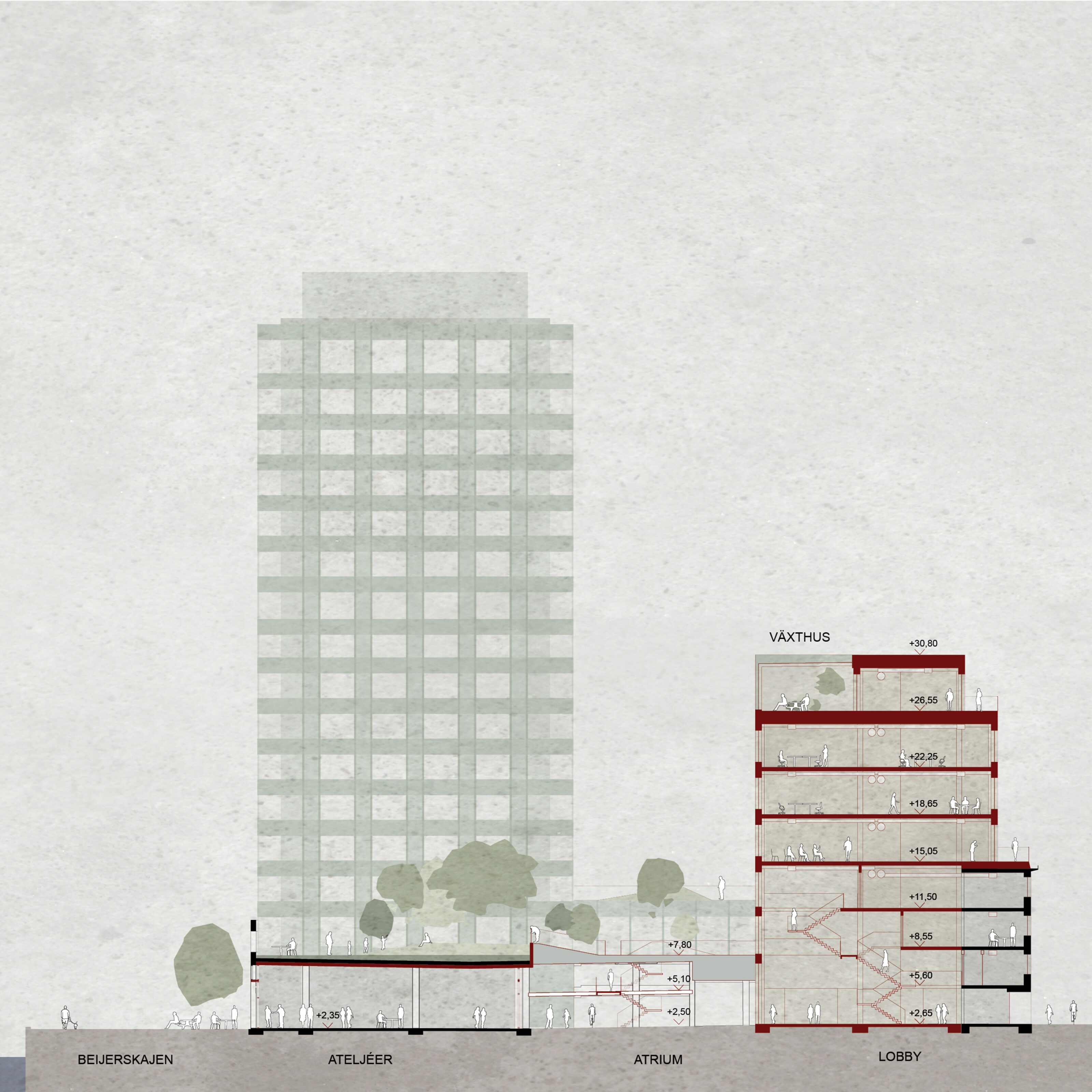
An interwoven combination of new and old
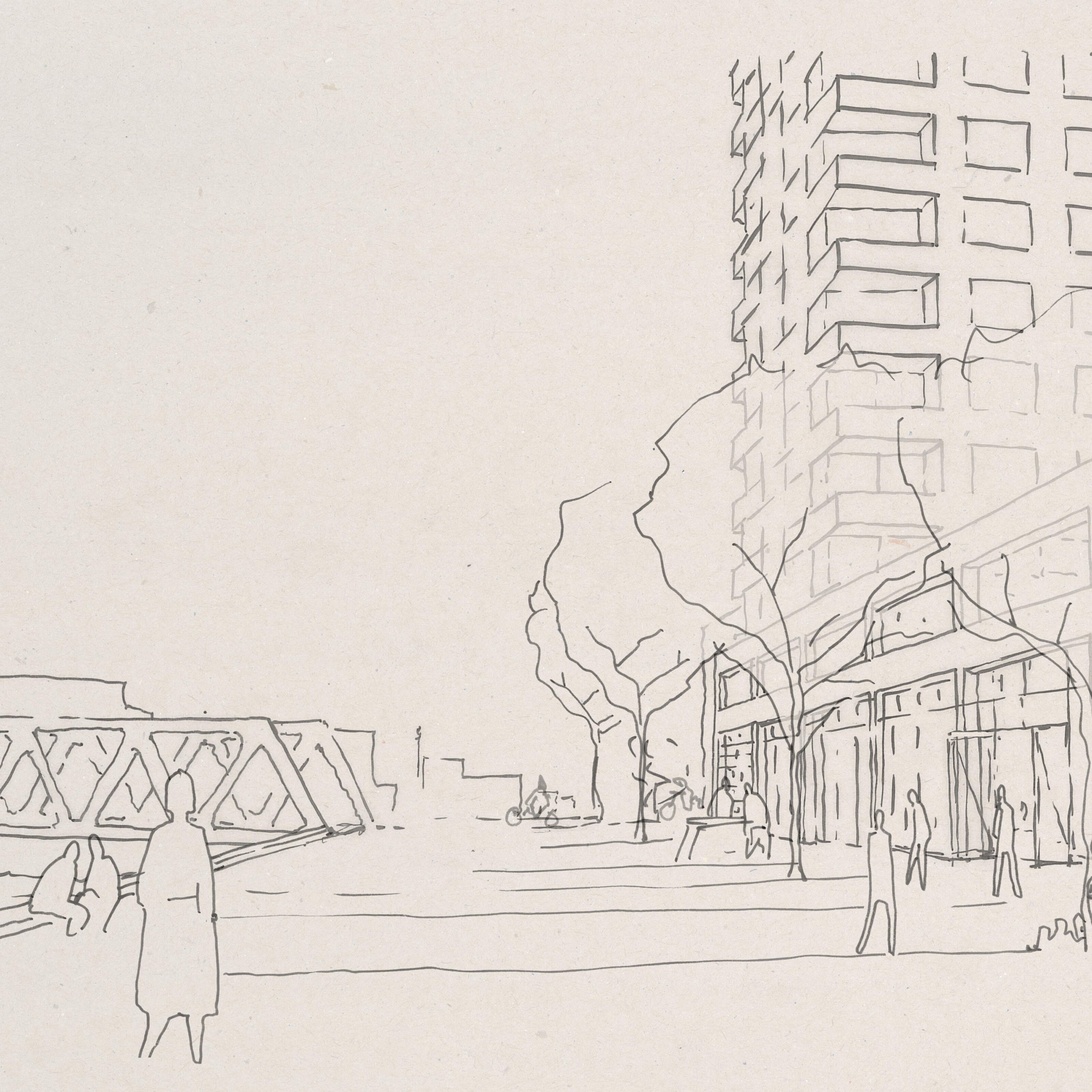
Facing the harbour basin, two individual residential volumes with different heights and floor plans are proposed. An extension and addition to the existing office block responds to Nordenskiöldsgatan’s scale, with setbacks from the existing street façade. A green elevated courtyard on the block’s former parking deck becomes shared for those who live and work on site, with a framed view over the quayside.


Chinese whispers – what is and has been
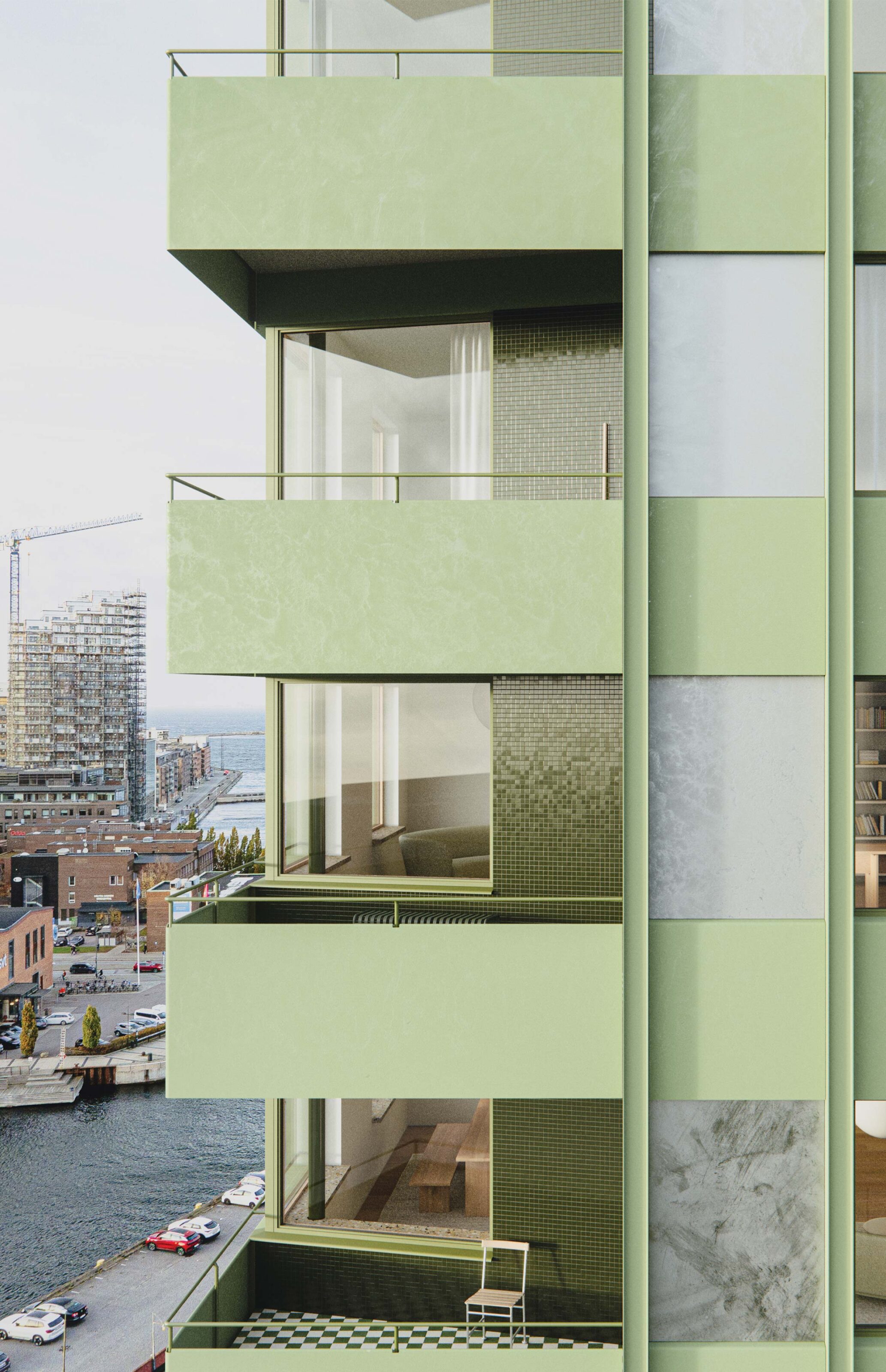
The facade design is based on the building volumes’ structural support that is placed on or in the existing structural grid. The three new-build additions are variations on a theme, with shifts in dimensions, material and colour palette. The green colour tones are found on site around the block, in the sea’s shimmer, in weathered green copper sheet, and in long-gone warehouse buildings. The building’s aesthetic becomes a game of ‘Chinese whispers’ with the past, allowing the use of different types of available facade sheets; recycled, corrugated or newly produced smooth ones.
